Mailboxes

Waiting for News From Spring

March 06, 2013

Photo courtesy rnhyppy

When spring finally arrives, it can be fun to see what winter left behind, and Jeffrey Harrison of Massachusetts is doing just that in this amusing poem. [Introduction by Ted Kooser.]

Mailboxes in Late Winter

It’s a motley lot. A few still stand
at attention like sentries at the ends
of their driveways, but more lean
askance as if they’d just received a blow
to the head, and in fact they’ve received
many, all winter, from jets of wet snow
shooting off the curved, tapered blade
of the plow. Some look wobbly, cocked
at oddball angles or slumping forlornly
on precariously listing posts. One box
bows steeply forward, as if in disgrace, its door
lolling sideways, unhinged. Others are dented,
battered, streaked with rust, bandaged in duct tape,
crisscrossed with clothesline or bungee cords.
A few lie abashed in remnants of the very snow
that knocked them from their perches.
Another is wedged in the crook of a tree
like a birdhouse, its post shattered nearby.
I almost feel sorry for them, worn out
by the long winter, off-kilter, not knowing
what hit them, trying to hold themselves
together, as they wait for news from spring.

American Life in Poetry is made possible by The Poetry Foundation (www.poetryfoundation.org), publisher of Poetry magazine. It is also supported by the Department of English at the University of Nebraska-Lincoln. Poem copyright ©2012 by Jeffrey Harrison, whose most recent book of poems is Incomplete Knowledge, Four Way Books, 2006. Poem reprinted from Southwest Review, Vol. 97, no. 1, 2012, by permission of Jeffrey Harrison and the publisher. Introduction copyright © 2013 by The Poetry Foundation. The introduction's author, Ted Kooser, served as United States Poet Laureate Consultant in Poetry to the Library of Congress from 2004-2006.

Coffee

Morning Quiet

March 04, 2013


I cup my warm mug of coffee between both hands as I walk back to my office. Is there anything better than that first sip of coffee in the morning? I brew a mixture of half vanilla-flavored coffee and half plain coffee, keeping both myself and my husband happy. (Guess who likes the flavored coffee?) That first sip tastes so good, especially when followed up with a bit of cranberry orange scone. I use the coffee pot’s timer so when I get up the house smells like coffee and it’s ready for me to pour.

The sky over the trees gradually lightens, flushing pale pink to salmon. I look around my office at the many things I love: books, art supplies, pictures, little knick knacks. The birds begin to wake up, chattering and chirping in the trees. A pair of cardinals takes turns at the bird feeder.

Everyone else is still asleep—even the dog. I sit in my rocking chair—the one I’ve had since my son was an infant. How many hours did we spend here together, while I fed him, read or sang to him as he lay cradled in my arms or sleeping on my shoulder? He’s 18 and more than six feet tall now.

It feels like I’m all alone in the world. I watch the Spanish moss sway in the slightest of breezes. I pick up the notebook I use for morning pages, the cardboard cover smooth beneath my fingers. I like to use composition books for morning pages. They’re a nice, portable size and sturdy enough to be used for months at a time. And they now come in many pretty designs—I usually stock up at the beginning of the school year when there’s more to choose from.  Some mornings words flow unstoppable from my pen as I perform a sort of brain dump onto the page, lightening myself for the day ahead, working through my plans, clearing out emotional fogs, aches and pains, happinesses. After I fill my three pages, my hand and arm ache pleasantly and I know that at least for today I’ve written something, even if no one else ever sees it. (My husband says when I die he’s going to read all my notebooks and journals. I say go right ahead—I won’t care at that point!)

I used to be a night person, loving to stay up past when others went to sleep. Now I’m too tired by nightfall, and I’d have a hard time staying up past when my son goes to bed (I think he’s nocturnal). I still love the beautiful, quiet hours near midnight. They still feel magical if I ever manage to stay awake that long. Perhaps I’ll gravitate back towards being a night person again when I no longer need to get up so early in the morning.

Both late night and early morning share something in common: solitude. I have a great need for solitude and quiet which I struggle hard to meet. My husband works at home and is always around. We still have our son at home. I’m lucky to get an hour or two alone in my home each week. I try to make up for that by getting up before everyone else in the morning.

Pretty soon, alarm clocks will go off, the dog will need to be walked, my day’s work will start. But for right now, I’m enjoying my coffee and the morning quiet.

What’s your favorite time of day?


Change

Happy Habits

March 01, 2013

Morning habit

“We are what we repeatedly do. Excellence, then,
is not an act, but a habit.”
—Aristotle

“Good habits, once established, are just as hard
to break as are bad habits”
—Robert Fuller

“Motivation is what gets you started.
Habit is what keeps you going.”
—Jim Rohn

Habits—good ones—can be our best friends. Research studies have revealed that as much as 45 percent of what we do each day is habitual—done automatically almost without thinking about it, driven by cues such as a specific place or time of day, a series of actions, certain moods, or the company of specific people. (Do we feel the need for a snack while watching TV perhaps, or do we check email as soon as we come back from lunch?)

In the areas of my life that run smoothly, I’ve developed good habits: I have a regular exercise schedule and a system for completing household chores, for example. However, I also have habits that need to be reassessed, like when and how I access email and Pinterest, and new habits I’d like to build, like sketching 15 minutes a day. How can I begin to develop new good habits and change bad ones?

The first step is simply to begin…somewhere, somehow. Since I want to add sketching to my days, I can pull out the kitchen timer, set it for 15 minutes and choose a time of day I feel will be conducive to that activity. I may have to try different times of day until I find one that works. I’m usually pretty good at this getting-started stage—it’s the sticking to it that’s a problem for me.

And stick to it I must if I want to firmly establish a new habit, and not just for 21 days, as we’ve often heard. Apparently, “21-days-to-a-new-habit” is a myth. One study found that on average it took 66 days for a new habit to form (so if you’re instituting a New Year’s resolution, you should be prepared to keep at it until March 6 in order for it to become a habit). The time it took to form a habit depended on how difficult the habit was (drinking a glass of water as opposed to doing 50 sit-ups, for example) and the individual him/herself. It seems some people simply find it easier than others to form habits. (During the study, one person took just 18 days to form a habit, while another was forecast to do so after 254 days, long after the study had ended.)

What if I want to change a bad habit? I found an interesting little tidbit about that when I was reading up on habit research: “…habits are responses to needs. This sounds obvious, but countless efforts at habit change ignore its implications. If you eat badly, you might resolve to start eating well, but if you’re eating burgers and ice cream to feel comforted, relaxed and happy, trying to replace them with broccoli and carrot juice is like dealing with a leaky bathroom tap by repainting the kitchen. What’s required isn’t a better diet, but an alternative way to feel comforted and relaxed” (Oliver Burkeman, “This Column Will Change Your Life: How Long Does It Really Take to Change a Habit?” The Guardian).

When I check email or putter on Pinterest, I’m usually looking for a way to relax or (I admit it) I’m avoiding doing something I don’t really want to do. To relax, maybe I could try simply sitting in my rocking chair with my eyes closed and taking a few deep breaths. I can also schedule email checks at certain times of day, instead of randomly doing it when I’m trying to avoid another task. Pinterest or other internet wanderings can be used as rewards after I finish some work, and I can pull out that timer again so that I won’t be completely sucked into the internet abyss.

I think these are small steps towards developing new habits that I can actually stick with, but I’d love to hear from you. What new habits are you developing and how are you doing it? What old habits are you trying to break?

Baby steps

Take One

February 27, 2013


“Take the first step in faith, you don’t have to see the whole staircase just to take the first step.”
—Martin Luther King, Jr.

What’s the first step you need to take today to reach one of your goals?

Friends

Random Monday Musings

February 25, 2013

So how is everyone? I feel like I’m just getting back into my routines after last week’s jaunt to Texas to see my friends. My thoughts are still flying here and there until I can capture them and put them into some sort of organized pattern. I think I’ll use today’s blog post to clear out a few of those random thoughts…

I do not like reading a long book on a tablet. Apparently, I need a visual way to see that I’m making progress, and the backlighting on my tablet bothers my eyes after a while. I seem only to be able to read a few pages before my hands get tired of holding the tablet and my eyes feel dazzled, even though I’ve already turned the illumination down as low as possible. Perhaps I should wear my sunglasses?

It’s just wrong to be sunburned, hot and sweaty in February. That’s what happened to us this weekend at our son’s track meet.

That's my boy.
Few things make me feel more cheated than waking up six minutes before my alarm is due to go off in the morning.

Watching shows like Diners, Drive-Ins and Dives after dinner is not a good idea unless you need to gain 15 pounds. I’m just sayin’.

I do not recommend watching the movie Flight before, well, flying. If there’s any turbulence at all, you will be convinced a part of the plane is about to snap off. I speak from sad experience.

I do recommend getting together with old friends for a weekend of revelry and confession. Thank you Kerri, Brynda, Becky, LuAnne and Melodie for being my friends!

It’s good to go away, but it’s great to come home. I always appreciate the comfort of my home more when I’ve been away for a few days.

What’s new with you? What have you been thinking about lately?

Penguins

We Go Home, Satisfied

February 20, 2013

Photo courtesy Anja Ranneberg

Elizabeth Bishop, one of our greatest American poets, once wrote a long poem in which the sudden appearance of a moose on a highway creates a community among a group of strangers on a bus. Here Ronald Wallace, a Wisconsin poet, gives us a sighting with similar results. [Introduction by Ted Kooser.]

Sustenance 

Australia. Phillip Island. The Tasman Sea.
Dusk. The craggy coastline at low tide in fog.
Two thousand tourists milling in the stands
as one by one, and then in groups, the fairy penguins
mass up on the sand like so much sea wrack and
debris. And then, as on command, the improbable
parade begins: all day they've been out fishing
for their chicks, and now, somehow, they find them
squawking in their burrows in the dunes, one by one,
two by two, such comical solemnity, as wobbling by
they catch our eager eyes until we're squawking, too,
in English, French, and Japanese, Yiddish and Swahili,
like some happy wedding party brought to tears   
by whatever in the ceremony repairs the rifts
between us. The rain stops. The fog lifts. Stars.
And we go home, less hungry, satisfied, to friends
and family, regurgitating all we've heard and seen.

American Life in Poetry is made possible by The Poetry Foundation (www.poetryfoundation.org), publisher of Poetry magazine. It is also supported by the Department of English at the University of Nebraska-Lincoln. "Sustenance" from For A Limited Time Only, by Ronald Wallace, © 2008. Used by permission of the University of Pittsburgh Press. The poem first appeared in Poetry Northwest, Vol. 41, no. 4, 2001. Introduction copyright © 2013 by The Poetry Foundation. The introduction's author, Ted Kooser, served as United States Poet Laureate Consultant in Poetry to the Library of Congress from 2004-2006.

Audur Ava Olafsdottir

Maybe I Should Call These Reading Un-Challenges?

February 18, 2013


My 2013 reading challenges are off to a good start. I’ve already read six books (out of 24) from my To Be Read (TBR) pile and two books for the Vintage Mystery Challenge (out of eight), with a third in progress. Having to wait around in the jury duty pool in early January wasn’t all bad! (For a complete list of books I've read for the challenges, click here. I update the list every time I finish a book, and it can always be found by scrolling down the sidebar at right.)

I haven’t been adventurous at all with this year’s reading challenges. I do need to do the TBR challenge if I don’t want to be entirely overrun by books and the Vintage Mystery Challenge isn’t so much a challenge as a way to discover new authors in my favorite genre. Next time I should choose a challenge that really is a challenge, perhaps? I don’t know. Reading is such a pleasure and relaxation for me, I hesitate to turn it into a true “challenge.” I have enough of those in my life. Perhaps instead of more challenging challenges, I might participate in the various read-alongs I hear about that don’t last a whole year?

But enough about why my challenges aren’t really challenges—let’s talk about books.


The first book I read this year was from my TBR pile: The Greenhouse by Audur Ava Olafsdottir, originally written in Icelandic and translated by Brian FitzGibbon. The Greenhouse follows Arnljotur, known as Lobbi, a young man from Iceland, who leaves his home, father and autistic twin brother, to restore an old garden in a remote village monastery in an unnamed country in Europe. Lobbi’s mother, with whom he shared a love of gardening, has recently died in a car accident.  On top of that, during one impulsive night, Lobbi has fathered a child with Anna, an acquaintance. Anna is raising their baby daughter, Flora Sol, without much input from Lobbi, who doesn’t really know what his role with Anna and Flora Sol should be—though he’s more clueless than unwilling. After he begins work on the monastery garden, Anna and Flora Sol come to visit. Anna wants to continue her studies and needs Lobbi’s help to care for the baby. During their time together, Anna and Lobbi begin to build a relationship, and Lobbi slowly learns how to nurture the people in his life as tenderly as he nurtures the flowers in the garden. I loved this book. It was a quiet and gentle story, with interesting secondary characters, such as Lobbi's father and the film-buff monk Father Thomas. It was a page-turner in the respect that I enjoyed that world so much I could hardly wait to get back to it.


My first Vintage Mystery read was Georgette Heyer’s Why Shoot a Butler? In a twist on a murder mystery cliche, a butler is the first victim. Amateur sleuth Frank Amberley must help the baffled police find the murderer before they arrest the young woman Frank is falling in love with. Reading this type of cozy mystery feels like slipping under a fuzzy blanket with a good cup of tea (I always crave Earl Grey tea when reading books or watching movies set in England). I love Georgette Heyer’s historical novels, which she’s better know for, but the few mysteries she wrote also contain her trademark wit and humor. I plan to read at least one more of her books before the challenge is done. I love the covers of these editions as well—wonderful vintage artwork.

By the time you read this, I’ll be in Texas catching up with a few girlfriends I used to work with, as well as my roommate before I got married, and maybe even my old boss. If you hear a lot of laughing and carrying on coming from the general vicinity of Dallas, that’s us. In addition to the talking, laughing and eating I expect to do, I should have some good reading time on the flights to and from. So please excuse me while I go choose what to take with me—my clothes are already packed, but the books…that takes me longer to decide…

What did you do this weekend?

Internet

Link Love--the Sequel

February 15, 2013

Grab a cup of coffee and come surf with me!

Don’t you just love the internet? I do. It’s full of fun, interesting, educational and inspiring information (of course, it’s full of a whole lot of junk, too—I do my best to ignore that). I don’t know how I’d procrastinate without it.

Here are some links for you to explore that I’ve found interesting or entertaining and that I want to share with you. Happy Friday, and enjoy!

Visit Inspiration Peak for thought-provoking quotes, poems and stories.

Request a daily “Pause for Beauty” email from Heron Dance by clicking here. A Pause for Beauty is a daily e-journal, and each morning email contains a nature painting and a reflection or poem.

I really enjoyed this post from Dani at Positively Present. (Her whole blog is packed with good stuff.)

Need some help compiling a Life List (more cheerful than a Bucket List, don’t you think?)? Visit Go Mighty. Read others’ Life Lists, see how they progress with their goals, and if the spirit moves you, request an invitation to become part of Go Mighty, “a place to outline your goals and dreams, track your progress toward checking them off, and find inspiration to challenge your personal status quo.”

Watch this video by Brendan Burchard. He notes that the very things that make us happiest are often the very things that cause us discomfort. 

If you like looking at beautifully soothing and peaceful photographs, click on over to The Murmuring Cottage.  I secretly fantasize that I live in that world of cups of tea, drying herbs, embroidery and sketching, cozy fires, sleeping kitties…you get the idea.

Love

Where You Come From

February 13, 2013

Photo courtesy Chelsee Tysoe
 “You don't have to go looking for love when it's
where you come from.”—Werner Erhard

Fear

I Can Do That

February 11, 2013


Remember how happy I was to get my office back?  Every day I enter it I get a little thrill of satisfaction. Followed quickly by an emotion I was not expecting:

Abject and overwhelming terror.

You see, I’ve just removed my last significant excuse for not spending the time I said I wanted to spend writing. My files and books and computer are neatly arranged at my fingertips. I can close my door, play music, gaze up at all the little talismans I keep for inspiration. I can spread papers all over the desk, all over the floor, even. I can burn the scented candle my husband doesn’t like. There’s no one to bother if I want to go in there to write at 8 a.m. or 2 p.m. or midnight.

What this new division of offices suggests is respect for and acknowledgment that I am working, not playing. But with that respect and acknowledgement comes pressure. Now that I’ve lost my “I have nowhere to work” excuse, I’d better start producing. What does producing look like? Is it pages done? Money earned? A skill honed or a connection made? How will I know I’m productive?

Instead of steadily tapping away at the keyboard, I look in my idea file and have a sudden urge to clean the kitchen ceiling fan. I take out my notebook and pen and stare out the window. I pull out a piece already in progress, hate its guts, and want to chuck it. It’s so hard. Why is it so hard?! I love the feeling of words flowing through me, when my pen lags behind the words spilling out, and my fingers curl into a cramp.

What I’m truly afraid of is: there is nothing inside. There are no words. And if a few dribble onto the page, they will be of absolutely no interest to anyone else. I read writers I admire and cringe at my own awkward prose.

Not long ago, I read a fantastic book called The War of Art, by Steven Pressfield. Now I turn back to its pages for advice. Pressfield writes, “Are you paralyzed by fear? That’s a good sign. Fear is good. Like self-doubt, fear is an indicator. Fear tells us what we have to do….Resistance is experienced as fear; the degree of fear equates to the strength of Resistance. Therefore the more fear we feel about a specific enterprise, the more certain we can be that the enterprise is important to us and to the growth of our soul. That’s why we feel so much Resistance. If it meant nothing to us, there’d be no Resistance.”

Resistance and fear, huh? Check and check. So what do I do? Pressfield’s solution to Fear/Resistance is “turning pro.” Turning pro means you are now a professional as opposed to an amateur. A professional focuses on the work and its demands. “Nothing else matters except sitting down every day and trying. Why is this so important? Because when we sit down day after day and keep grinding, something mysterious starts to happen. A process is set into motion by which, inevitably and infallibly, heaven comes to our aid. Unseen forces enlist in our cause; serendipity reinforces our purpose.”

“Nothing else matters except sitting down every day and trying.”

I can do that. I can practice butt-in-chair using the kitchen timer if necessary. Filling pages with nonsense, if necessary. The only way to overcome the terror of writing is.to.write. Even if it’s morning pages, or a journal entry, or a description of the wren hunting bugs in the shrubs outside my window. I can do that.

Do you ever experience this type of fear/resistance when you want to create something? (Please tell me I’m not alone!) How do you overcome it?

Books

February is for (Book) Lovers

February 08, 2013


If you’re a book lover, February has some fun and worthwhile bookish events. First, February is Library Lovers’ Month, a celebration of school, public and private libraries. This month is a time for the community to recognize the value of libraries and work to keep them strong. Check your local library(ies) for any events planned.

February 14 is International Book Giving Day, an initiative dedicated to increasing children’s enthusiasm for and access to books. Organizers aim to put books into the hands of as many children as possible. Suggestions for those who want to participate include giving a book to a friend or family member, leave a book in a waiting room where children will be, or donate a book to an organization that provides books to children, such as a library, second-hand store, children’s hospital or shelter. Organizations such as Books for Africa, Books for Kids, or Project Night Night are also good places for book donations intended for children.

I have to admit, though, that my favorite bookish celebration in February is tomorrow: Read in the Bathtub Day! I love to read in the bathtub (another reason an e-reader won’t ever completely replace paper books in my heart) so I will be more than happy to participate.

Books and reading are two of my very favorite simple pleasures—so any excuse to celebrate them is welcome. Do you have any special bookish celebrations planned in February?

Love

Love Is...?

February 06, 2013

Love is a warm puppy...

For me, the most worthwhile poetry is that which reaches out and connects with a great number of people, and this one, by Joe Mills of North Carolina, does just that. Every parent gets questions like the one at the center of this poem. [Introduction by Ted Kooser.]

How You Know

How do you know if it’s love? she asks,
and I think if you have to ask, it’s not,
but I know this won’t help. I want to say
you’re too young to worry about it,
as if she has questions about Medicare
or social security, but this won’t help either.
“You’ll just know” is a lie, and one truth,
“when you still want to be with them
the next morning,” would involve too
many follow-up questions. The difficulty
with love, I want to say, is sometimes
you only know afterwards that it’s arrived
or left. Love is the elephant and we
are the blind mice unable to understand
the whole. I want to say love is this
desire to help even when I know I can’t,
just as I couldn’t explain electricity, stars,
the color of the sky, baldness, tornadoes,
fingernails, coconuts, or the other things
she has asked about over the years, all
those phenomena whose daily existence
seems miraculous. Instead I shake my head.
I don’t even know how to match my socks.
Go ask your mother. She laughs and says,
I did. Mom told me to come and ask you.

American Life in Poetry is made possible by The Poetry Foundation (www.poetryfoundation.org), publisher of Poetry magazine. It is also supported by the Department of English at the University of Nebraska-Lincoln. Poem copyright ©2010 by Joe Mills, whose most recent book of poetry is Love and Other Collisions, Press 53, 2010. Poem reprinted from Rattle, Vol. 16, no. 1, Summer 2010, by permission of Joe Mills and the publisher. Introduction copyright © 2013 by The Poetry Foundation. The introduction's author, Ted Kooser, served as United States Poet Laureate Consultant in Poetry to the Library of Congress from 2004-2006.

College

The Milestones Just Keep Coming

February 04, 2013

The University of Tampa

I spent much of Saturday with my son attending the “Florida Admitted Students Preview Day” at the University of Tampa, the college he is slated to attend in the fall. Let me just say, I don’t see how it’s possible he’s nearly ready for college. Didn’t he just learn to walk yesterday?

The college visit brought back memories of my own college days, four of the happiest years of my life. In college, I began to find out who I really was, discovered I loved to travel, fell in love for the first time, and met life-long friends (including my husband). Oh, yeah, I learned a few things, too. If my son’s experience is like mine, it’s safe to say that the child who enters will not be the same one who graduates.

Saturday, college officials start by separating parents and kids—fitting because we will soon be separated most of the time (sniffle). I find as I walk away from my son that I have confidence he is (mostly) ready for this step, that he won’t be unduly overwhelmed or nervous, as I would have been at his age. I have only mild feelings of nostalgia/angst—I’m mostly excited for him to move into this new stage of his life.

I can picture him at this school. The smaller class size, emphasis on experiential learning and more personal attention seem tailor-made for him. Not to mention the abundance of food available at all hours on the college’s meal plan. (Actually, I kind of want to go here.)

I jot plenty of notes while I listen to the director of enrollment, the director of career services and the director of financial aid (especially her!). I realize there’s a lot to do before he starts school, whether it’s exploring scholarship possibilities, collecting items for his dorm room or even registering for a class at the local community college to get a head start on credits and the college experience.

As we drive home, I find it hard not to give him advice and make suggestions about what classes and extra-curriculars he might like. Yes, I know him pretty well, but now is not the time for unsolicited advice from Mom. To quote the UT senior who spoke to the parents, “Parents should guide, but the students should lead. This is our time.”

We’ve reached another milestone, another phase of the process of letting go. One more finger of the hand holding Nick’s has been loosened. I haven’t let go yet...no, not quite yet. But I have a feeling it won’t be long now.

Everyday adventures

Field Trip Friday: Sunken Gardens

February 01, 2013


Some weeks, just getting to Friday feels like an accomplishment. Therefore, I’ve instituted Field Trip Friday—as a reward to myself for working hard, and as a way to expand my awareness and appreciation for where I live. (Do you find that you take your local attractions for granted? I do.)

Last Friday, my partner in adventure Laure and I escaped to another local garden, Sunken Gardens in St. Petersburg. (You can read Laure's post about our trip here.)

In 1903, George Turner, Sr., a plumber and avid gardener, bought the site of the garden. Draining a shallow lake dropped the property 15 feet and provided the rich soil to grow exotic plants from all over the world (and provided inspiration for the garden’s name). According to the Sunken Gardens brochure, his garden became so popular with friends and neighbors that he began charging them 25 cents for a tour. In 1935, the garden opened as Turner’s Sunken Gardens and was owned and operated by three generations of the Turner family. In 1998, it was designated a local historic landmark, and in 1999, the City of St. Petersburg purchased it.


The gardens contain more than 50,000 tropical plants and flowers, as well as a few exotic birds, including flamingoes. Small ponds and waterfalls, an orchid arbor, a Japanese garden, an amphitheater and a meditation garden where yoga classes take place are just a few more of the features packed into this little oasis in the middle of the city. A few photos (click photo for a larger view):

What is this? There was no identifying marker.
Close-up of the fruit (?)


Laure and I walked slowly through, looking at and photographing what took our fancies. After our first pass, we briefly walked through again, sketching. I just did a few pencil sketches, which I still have to add color to.


We finished our field trip with lunch at Fourth Street Shrimp Store Market and Restaurant and a stroll through Haslam’s book store.  (I bought only one book, showing heroic self-control, don’t you think?)

I think Field Trip Friday will happen more often in 2013. What better way to enjoy simple pleasures and everyday adventures than by exploring and appreciating what I have locally, getting out of my normal rut routine, and just plain having fun?

What local attraction(s) have you been wanting to visit?

Birth

Darkness and Light

January 30, 2013


“Help us be ever faithful gardeners of the spirit, who know that without darkness nothing comes to birth, and without light nothing flowers.”
—May Sarton

Advice

One Size Fits...

January 28, 2013


During a recent purge of my son’s room, he handed me his bathrobe saying it didn’t fit. When I checked the label, it said “one size.” An obvious lie, as it does not fit my 6’1” beanpole son.

Advice is the same, have you noticed? Whether it’s advice on losing weight, animal training, child rearing, or how to increase your creativity, advice is everywhere—and much of it conflicts.

I’m happy to listen to advice (and some will tell you I’m also happy to give it). I’ve learned much from people who know more than I, saving me time and heartache. The advice is not the problem. The problem is when I put aside my own common sense or convictions to follow what someone else says I should do.

Guess what? There’s no “one right way” for everyone to do something.

Just as one-size-fits-all clothing doesn’t actually fit all (and aren’t we made to feel it’s somehow our fault it doesn’t fit?), one-size-fits-all advice doesn’t, either. Which doesn’t mean it’s not perfectly good advice for you, for me, for my best friend or my husband at some point. Sometimes it’s advice whose time has not yet come. Sometimes I recognize a piece of good advice, but I can’t follow it because my heart is just not in it.

Since I’m interested in self-improvement/educational type material and read a lot of it, in order to cope with the onslaught of advice, I’ve developed rules for taking it (or not taking it):

Does it make logical sense to me?

Is it possible to do without major disruption in my life?

Do I want to do it, or do I feel I should do it to please someone else?

Do I have to minutely follow complicated or multi-step instructions without deviation or else it “won’t work”?

Am I allowed to think for myself and ask questions without being made to feel that I’m stupid?

Keeping these rules in mind helps me gather the advice that will truly benefit me, and let go of what won’t. And that’s my advice on taking advice (but you don’t have to take it)!

What’s the best piece of advice you’ve been given? The worst?

Books

The Books That Shape Us

January 25, 2013


“It is what you read when you don't have to that determines what you will be when you can't help it.”
—Oscar Wilde 

Last year, as part of a multi-year “Celebration of the Book,” the Library of Congress opened an exhibit of 88 “Books That Shaped America.” According to Librarian of Congress James H. Billington, “This list is a starting point. It is not a register of the ‘best’ American books—although many of them fit that description. Rather, list is intended to spark a national conversation on books written by Americans that have influenced our lives, whether they appear on this initial list or not.” (The list did indeed spark conversation—as usual there was much squabbling about what was on the list and what was left off. Simply type “Books That Shaped America” into your search engine for proof.) While the physical exhibit has now ended, click here for the online version. 

The exhibit got me thinking about the books that have shaped me. Books have been my friends for as long as I can remember, and learning to read was one of my first goals when I was a child (along with learning to whistle and to blow bubbles with gum—I was an ambitious young lady). The books that follow are mostly not considered “classics,” but for some reason they resonated deeply with me, shaping my understanding of myself and the world. Here are just a few of the books that I consider have shaped who I am:

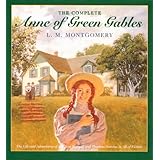
Product DetailsThe Anne of Green Gables series (L.M. Montgomery). Hands down my favorite childhood books. I didn’t just enjoy the stories: I loved Anne and aspired to be like her. She was smart, spirited, loving and she always tried to do right and help others. A girl could do worse than emulate Anne Shirley. Even now, every couple of years, I reread the series for the pleasure of renewing my acquaintance.

Sidetracked Home Executives (Pam Young and Peggy Jones). I loved the system of organizing household chores that these sisters created to move from “pigpen to paradise.” I really didn’t know how to stay on top of cleaning when I first got married, and their advice helped me figure it out. I still use some of their basic principles to keep my house running. This book was funny and charming and their 3 x 5 card program was super simple to implement.

A Walk in the Woods (Bill Bryson). This book was a revelation of how non-fiction could be just as riveting and entertaining as fiction. Bryson tells a great story, weaving historical information seamlessly into the narrative of his experience hiking the Appalachian Trail. This book is funny, fascinating and educational all at once. I want to write like that.

Poisonwood Bible.jpgThe Poisonwood Bible (Barbara Kingsolver). Another revelation. This was my first experience reading Kingsolver, and I was forever hooked. Up until I read Poisonwood, other than the occasional “classic,” I rarely read anything more taxing than an Agatha Christie mystery. I’ve read nearly everything Kingsolver has written, and continued to expand my fiction horizons.

Refuse to Choose (Barbara Sher). I’ve read and liked several of Sher’s books, but this one helped me understand why I flit from interest to interest, and why so many things sound fascinating to me. I’m a “Scanner”—a person who scans the horizon, eager to explore everything out there instead of zeroing in on a single pursuit. I want to learn about so many things, and pursue so many hobbies, how can I do it all? My favorite of Sher’s tools is what I call the Six-Year Calendar of Happiness: a list of the major interests I want to pursue in the next six years (as opposed to trying to pursue them all at once). I admit I haven’t been able to follow the calendar as well as I’d like because my current interests (my horse, learning to sketch and paint in watercolor) are time consuming enough that I really don’t have much time for other interests. That doesn’t mean I’ve given up on things like learning another language or doing cross stitch projects. It just means they keep getting bumped back on the calendar.

When Women Stop Hating Their Bodies (Jane R. Hirschmann and Carol H. Munter). Authors Hirschmann and Munter believe that dieting turns women into compulsive eaters obsessed with food. Instead, if we stopped hating our bodies, we would be learn to accept them, feed ourselves what we really need, and stop trying to measure up to society’s “ridiculous and impossible standards of female beauty.” I read this when I first noticed that I could no longer eat anything I wanted and not put on weight. (Sadly.) I believe it did keep me from hating my body, though I still struggle with true acceptance. I think I’m more balanced in my approach to eating and my body because of this book.

TheAlchemist.jpg 
The Alchemist (Paulo Coelho). I read this for a book club, and I loved the simple story with its inspirational message to follow your heart. After reading this, for the first time I realized I actually had dreams to follow and that it was OK to do so.  

Ursula K. Le Guin said, “We read books to find out who we are. What other people, real or imaginary, do and think and feel...is an essential guide to our understanding of what we ourselves are and may become.”  Through our reading we shape and reshape our opinions, our beliefs, our lives. These are just a few of the books that have shaped me. What books have shaped you?

P.S. I’m excited to tell you that later today my bookshelves and I are being featured in Danielle’s (A Work in Progress) Lost in the Stacks: Home Edition series. Come by, sneak a peek at the book bounty and say hello.

Domestic diplomacy

Domestic Diplomacy

January 23, 2013

Photo courtesy Rodrigo Valladares

Though most of us are not formally known as diplomats, many of us learn to be experts at domestic diplomacy, and the sorts of complex negotiations we find ourselves in can require a lot of patience. Here’s Dan Gerber, who lives in California, showing us some of that patience. [Introduction by Ted Kooser.]

Marriage

When you are angry it’s your gentle self
I love until that’s who you are.
In any case, I can’t love this anger any more
than I can warm my heart with ice.
I go on loving your smile
till it finds its way back to your face.

American Life in Poetry is made possible by The Poetry Foundation (www.poetryfoundation.org), publisher of Poetry magazine. It is also supported by the Department of English at the University of Nebraska-Lincoln. Poem copyright ©2011 by Dan Gerber. In 2012, Copper Canyon Press will publish Dan Gerber’s Sailing Through Cassiopeia. Poem reprinted by permission of Dan Gerber. Introduction copyright © 2013 by The Poetry Foundation. The introduction's author, Ted Kooser, served as United States Poet Laureate Consultant in Poetry to the Library of Congress from 2004-2006.

Awards

You Said It

January 21, 2013

Do you know how much I love reading comments? Whenever I put up a blog post, I eagerly wait to see what you have to say in response. I read every comment and try to respond to each one. It means a great deal to me when you say something nice about the post, of course, but I also love to hear your thoughts on the topic of the day. In return, I try to visit as many blogs as possible and leave my own comments—even if it’s just a sentence or two so the blogger knows someone has read and understood her (99% of the time it’s a her) words. We all like to be seen and acknowledged, don’t we?

For several months, I’ve been toying with the idea of writing a post quoting you, my wise and witty readers—and today’s the day. Since I’ve been blogging these past three years, you’ve followed my ups and downs and chipped in with your advice and encouragement. Below you’ll find just a few of the comments that have made a difference to me in the last three years, in no particular order. Comments have been edited for length, but not changed in meaning.


Sara: “A friend once told me to buy 5 x 7 cards and whenever you have ‘light’ moment or one that's happy and totally present, you write it down and keep them in one of those albums you can buy at a pharmacy for pictures.

Whenever you're feeling a loss of light, you look through it and remember the times when the ‘light’ was there.” 


Laure: “Some of my happiness busters are being overly tired, too much ‘news’ that I can't do anything about, and some of the ones you mention.

The words to one of the Eagles' songs, Already Gone, keep running through my mind,
‘...so oftentimes it happens we live our life in chains/That we never even know we have the key.....’

How often do we hold ourselves down, back, under, less than, not good enough, not enough and so on, when really…we are more than enough and far more? We just don't understand we are the key.”


Laure: “To my way of thinking there are seeds of bad in all good things that happen and seeds of good in all bad things that happen…it is up to us which we cultivate.”

Elizabeth: “I agree with Laure—there are seeds of both in every experience…and with Kathy and the story of the farmer—time will tell which is good or bad.

It seems to me that it is nearly always up to ME in how I choose to see an event. Sometimes stepping back to observe the big picture is all I need to adjust my thinking.”


Kathy M: “The older that I get, the less hard I am on myself and on others. I wish that I had done many things different, but, look, it has all turned out fine in spite of myself.

Long ago I heard that regret in a way insults the person that I was long ago, before I knew better. Life is a journey, and perhaps when we are better at forgiving ourselves we become better at forgiving others.”


Timaree: “Sometimes we get frozen in the litany of things happening all around of which we have little say. Mother Teresa used to tell people when they asked what they could do, to love and take care of their families. That's our first and most important job and when that is taken care of, we can branch out. Like you, I would love to see a world of people being kind to one another. It has to start somewhere and if taking care of ourselves gets us going then let's do it. I read on another post today about a smile that led to one thing and then another and another. That's something we should all be able to do—give a smile. They can be contagious as a yawn.”

And though I didn’t include quotes from you in this list, I deeply appreciate the continued friendship and input of Claire, Cheryl, and Danielle. (And I miss you, Meredith!) I thank you for all your encouraging, wise, funny and delightful comments. And because you all have made such a difference to me, I pass on the “Wonderful Team Member Award” to each one of you. (Thank you to Kathy of Oregon Gifts of Comfort and Joy who passed this on to me.) I know some bloggers aren’t big on awards, but I liked this one because it honors the thoughtfulness of blog readers. Feel free to accept and pass on if you wish. If otherwise, just know that I (and all bloggers) appreciate your taking the time to comment on our work.

If you choose to participate, the rules are as follows:
  1. Thank the nominator and link back to their site (Thanks, Kathy—see above).
  2. Display the award (see below).
  3. Nominate no more than 14 readers of your blog you appreciate and leave a comment on their blogs to let them know about the award.
  4. Finish this sentence: A great reader is…Someone who reads in a spirit of curiosity and openness, takes what she can from what she reads and lets the rest go. 

25th Anniversary

That's a Quarter of a Century

January 18, 2013

Yesterday I started my day with a workout, then cleaned our master bath and went grocery shopping. It sounds like an average Thursday—and it was, except for the fact that it was our 25th wedding anniversary.


My husband and I celebrated the day by exchanging cards and small gifts, then going to see Les Miserables, a movie we’ve looked forward to since we first saw the trailer months ago. Does that sound unromantic? I admit it’s not a trip to a bed-and-breakfast complete with champagne and chocolates, but we’ve done our fair share of that. After 25 years, we’ve learned that romance is wonderful but it’s not the only thing that keeps a marriage strong. Being honest about needs and wants, putting in the time and effort to keep a home running and income flowing, working together as well as playing together—these things, unromantic as they are, hold a marriage together over the course of a lifetime.  Romance is only the beginning. Marriage is acting loving when you’re not feeling that way, forgiving when you don’t think you can, and finding someone who is willing to do the same for you. Just like happiness is not just about “happy” events.

My husband and I have built a life, a family, a home together, and that’s worth celebrating in small and large ways. Yesterday we celebrated in small ways—with flowers and chocolates and a movie. Later this year, we’re planning a just-the-two-of-us trip (when we finally decide where we want to go) where we’ll have a little more time for romance. I’m looking forward to it.

So, so young...

Holidays

Happy National Nothing Day

January 16, 2013


According to Chase’s Calendar of Events, National Nothing Day was created “to provide Americans with one National day when they can just sit without celebrating, observing or honoring anything.”

This day is just for you—so relax and enjoy it. (To learn more about National Nothing Day, if it’s not too much trouble, click here.) What won’t you do to celebrate?

 “Doing nothing is better than being busy doing nothing.”
—Lao Tzu

Happiness

A Global Vision of Happiness

January 14, 2013


Product Image
One of the best things about having a blog that focuses on happiness is “having” to read various happiness-themed books. I recently stumbled upon a cool one: The World Book of Happiness, edited by Leo Bormans. Bormans asked 100 experts in the field of positive psychology to sum up their work in 1,000 words or less, using terms the average person would understand. These insights were to be research based, not “spiritual philosophy.” Here are a few tidbits to whet your interest:

Once basic needs are met, more money does not equal more happiness. This is called the Happiness Paradox. (Stavros Drakopoulos)

While happiness can be pursued, we shouldn’t use the laws for outer achievement (“brute force and adrenaline-charged action”) in that pursuit. Instead, we should become “happiness detectives,” by observing our feelings, nurturing good times and always looking for new ways to increase happiness in ourselves and others. (Michael Hagerty)

In order to flourish, we should allow ourselves to feel (smile, laugh, cry when we need to), see, listen, taste and smell—participate in all the joys of life. Appreciate who and what we are, and anticipate and open ourselves to support from others. Ask for support if necessary, and provide it to those who need it. We are resilient, able to bounce back when faced with negatives, becoming stronger in the process. (D.J.W. Strumpfer)

Three universal components of happiness: Enjoyment—“possessing certain things that give one (passive) pleasure; contentedness—“the equilibrium between needs and satisfaction”; achievement—“the fulfillment of one’s capacities…doing what one enjoys.” (Doh Chull Shin)

We don’t need to feel obligated to be happy and shouldn’t think of happiness as a right. Sadness is a normal and healthy emotion, and is sometimes necessary and worthwhile. If we want to feel happy again, stop doing things that make us miserable, stop thinking about our own happiness and reach out to help someone else. (Grant Duncan)

Happiness is like a muscle—there are many things we can do to “train” it. Focus on happiness (instead of unhappiness) and it grows. The pursuit of happiness involves mind, body and spirit, and there are things we can do to nurture each of these aspects of ourselves which will help us develop greater happiness. (Miriam Akhtar)

I expect to be dipping in and out of this book for a while, and I’ll be sure to share with you any new or profound discoveries.

If you had to sum up what you’ve learned about happiness, what would you write?

Excess

Less Is More

January 11, 2013


Between sickness (nearly recovered from) and jury duty (completed), I’ve been a bit delayed in my customary reflection on the past year and planning for a new year. Even so, in the past couple of weeks, an odd little theme has appeared in my thinking: “It’s all too much.”

A few years ago, I read a book by organizer Peter Walsh called It’s All Too Much and ever since then, that phrase pops into my head whenever I’m overwhelmed. As you know, that’s just what I’ve been feeling lately.  Instead of choosing a word of the year or setting out to remake my life, I’m just…not. At least, not right now. I’m not setting new goals or embarking on bold new adventures. I’m simplifying and downsizing.

I just have too much—books, food, possessions of all kinds, hobbies, interests and the wonderful blessing of friends and family relationships. I really am grateful for all that I have—I’m not complaining! I have, however, allowed my life to get out of hand. I have too much, and I try to do too much. Nearly every day I find myself putting aside activities that would feed my soul or work that really means something because I’m drowning in the sheer mass of life, much of it menial and unimportant.

So 2013 begins with a purge—of the physical (How many empty boxes does one need? Does this old radio even work?) as well as the non-physical. Activities I take for granted will be scrutinized—do they really need doing? By me? At this particular time or to that standard?

I don’t consider having too much a “real” problem. I’m not suffering heartbreak over it. I realize I’m lucky to be in this position when so many people around the world face true need. But getting rid of excess will help me appreciate what remains while cutting down on waste, guilt and chaos. Spending less time and money on what doesn’t matter will free up more for what does. I look forward to seeing what fills my life when the excess is gone.

What do you have too much of?

Koi Pond

Beneath the Quiet

January 09, 2013


Among the most ancient uses for language are descriptions of places, when a person has experienced something he or she wants to tell somebody else about. Some of these get condensed and transformed into poetry, and here’s a good example, by Susan Kolodny, a poet from the Bay Area of California. [Introduction by Ted Kooser.]

Koi Pond, Oakland Museum

Our shadows bring them from the shadows:
a yolk-yellow one with a navy pattern
like a Japanese woodblock print of fish scales.
A fat 18-karat one splashed with gaudy purple
and a patch of gray. One with a gold head,
a body skim-milk-white, trailing ventral fins
like half-folded fans of lace.
A poppy-red, faintly disheveled one,
and one, compact, all indigo in faint green water.
They wear comical whiskers and gather beneath us
as we lean on the cement railing
in indecisive late-December light,
and because we do not feed them, they pass,
then they loop and circle back. Loop and circle. Loop.
“Look,” you say, “beneath them.” Beneath them,
like a subplot or a motive, is a school
of uniformly dark ones, smaller, unadorned,
perhaps another species, living in the shadow
of the gold, purple, yellow, indigo, and white,
seeking the mired roots and dusky grasses,
unliveried, the quieter beneath the quiet.

American Life in Poetry is made possible by The Poetry Foundation (www.poetryfoundation.org), publisher of Poetry magazine. It is also supported by the Department of English at the University of Nebraska-Lincoln. Poem copyright ©2011 by Susan Kolodny from her first book of poems, After the Firestorm, Mayapple Press, 2011. Poem first appeared in the New England Review, Vol. 18, no. 1, 1997. Reprinted by permission of Susan Kolodny and the publisher. Introduction copyright © 2013 by The Poetry Foundation. The introduction's author, Ted Kooser, served as United States Poet Laureate Consultant in Poetry to the Library of Congress from 2004-2006.

Everyday adventures

Doing My Civic Duty

January 07, 2013

I was chosen for a jury today, and tomorrow I’ll be at the trial—so 2013 is starting off with a dose of adventure. I don’t know exactly why, but I find the whole jury duty process stressful. Possibly because I’m in an unfamiliar environment with a lot of unknowns: Will I get lost driving downtown and be late for my summons? Will I have to stand up and talk in front of 29 other prospective jurors and the court officers? Will I get a lunch break? Will I be chosen for a jury? Will the trial be long and drawn out and, oh my gosh, will we be sequestered?! (I know, I watch too many crime shows on TV.)

No, yes, yes, it’s not supposed to be, and no. So hopefully, I’ll be back with you here on Wednesday.

Unless I’m sequestered, of course.

Books

I Accept: Reading Challenges in 2013

January 04, 2013


Even though I read a lot in 2012 (112 books!), I was unorganized about it, I didn’t read the classics I wanted to read, and I allowed my to-be-read (TBR) stack to proliferate ridiculously. I also didn’t participate in any reading challenges, and I missed that. I don’t need prodding to read, but I like the feeling of working towards a goal. So this year, I’m going to participate in two reading challenges, both sponsored by Bev at MyReader’s Block.

I desperately need to do another “Off the Shelf” challenge, and there are several floating around out there with varying degrees of rigor. I chose Bev’s TBR challenge because it’s simple, I like the button and the mountain references! I’m shooting for the Mont Blanc level: 24 books from my TBR pile, and if it goes well, I might upgrade to the Mt. Vancouver level (36 books). Even so, I really am going to have to put myself on a book-buying diet. Even 36 books will barely put a dent in my stack. Perhaps it’s time to go through and purge the piles again.

Vintage Reading  Challenge 2013 Signup
The second challenge is another Vintage Mystery Challenge. I participated in Bev’s VMC in 2011 and loved it. I found some great, new-to-me authors (and revisited some old favorites). This year, Bev has come up with categories that sound like lots fun.  To be eligible for a prize, there’s an eight book minimum using the categories she’s provided, which include things like “Colorful Crime: a book with a color or reference to color in the title” and “A Calendar of Crime: a mystery with a date/holiday/year/month/etc. in the title.” I haven’t chosen all my titles yet, but I think my first choice will be Gladys Mitchell’s Spotted Hemlock (“Murderous Methods: a book with a means of death in the title”). I’m planning to look for new authors and books instead of just rereading old favorites…though I’m sure one or two will sneak in.

Do you participate in reading challenges? Which ones? Do you have any reading plans for 2013?