Family

So. Very. Tired.

July 29, 2013


How can three days feel like a week? My son and I flew to Texas Friday for our niece/cousin’s wedding Saturday, and flew home Sunday. Whew. The wedding was at 5 p.m. with the reception and “after party” at my sister- and brother-in-law’s house lasting until much later. (I believe my son and nephew stayed up until 3…)

As usual, a trip/family milestone triggered some introspection. This go-round’s random observations

I feel lucky to get along so well with my husband’s family. I don’t have brothers and sisters so I love sharing his. All the fun without the drama!

I did more people watching. This time, I especially noticed the facial expressions of women my age and older. Some women (men, too) look like nothing pleases them, and they’re just waiting for an excuse to get mad. I don’t want to be—or to look—soured by life; I want to meet it with a smile, curiosity and optimism. How can I make my face reflect that?

It may be physically impossible not to dance to Play That Funky Music, especially after one has had a glass or two of champagne. 

An idea for after we drop our son off at college: make a bucket list on the way home in the car. My sister- and brother-in-law did this after dropping our niece (their youngest) at college. Might keep me from crying all the way home. (I said might.)

So that was my weekend. How was yours?

Antoine de Saint-Exupery

For Jen and Michael

July 24, 2013

Photo by Mary Cyrus, Mary Cyrus Photography
In honor of our niece’s wedding, some quotes on love:

“Life has taught us that love does not consist in gazing at each other but in looking outward together in the same direction.”
—Antoine de Saint-Exupéry, Wind, Sand and Stars, translated from French by Lewis Galantière

“Love is the condition in which the happiness of another person is essential to your own.”
—Robert Heinlein

“Anyone can be passionate, but it takes real lovers to be silly.”
—Rose Franken


Congratulations, Jen and Michael!

Decisions

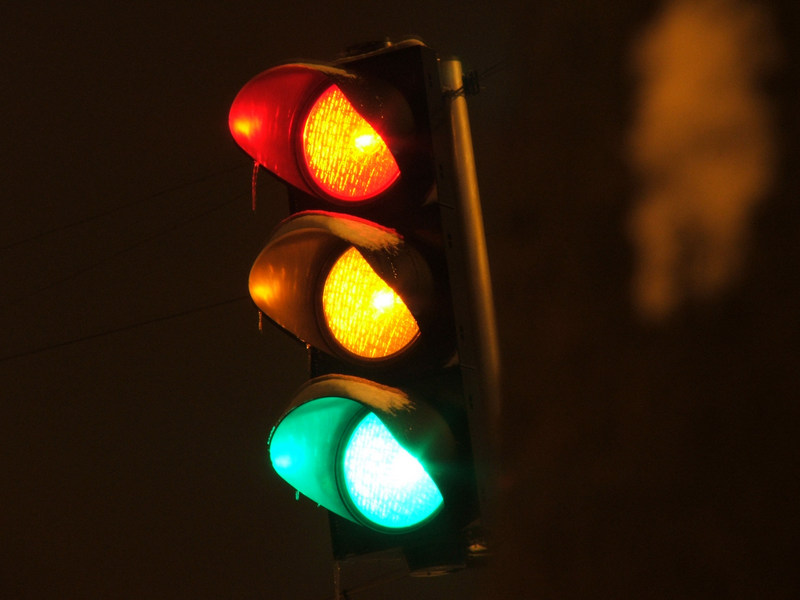
Red Light, Green Light...Yellow Light?

July 22, 2013

Photo courtesy Balazs Szoke

Do you remember playing the game “Red Light, Green Light” when you were a child? One person is the stop light and the rest of the kids line up on the other side of the yard. When the stop light says, “green light” and turns her back, the other players advance toward her. When she turns back around and says, “red light,” anyone caught still moving is out. The stop light repeats this until either someone touches her or all the other kids are out.

It would be nice to have such clear signals in grown-up life, wouldn’t it? Someone or something to tell us “green light”—go forward, or “red light”—stop. Other than literal traffic signals, life is seldom that explicit. Occasionally, our desires and responsibilities neatly align, and we see a clear road ahead. More often, we must develop not only our own internal signaling system of red light, green light, but also a functioning “yellow light”—“use caution”—when making decisions. I want to talk about the importance of that yellow light.

When a decision looms or an exciting opportunity presents itself, yellow lights can keep us from rushing ahead too fast without thinking. Perhaps we’ve decided to focus on a specific goal, or we’ve committed to simplifying life and reducing our activities. After consideration, we may choose to stop instead of go forward. On the other hand, a yellow light might also keep us from automatically saying no when that opportunity arises. Some of us, myself included, can be too cautious—braking when we should step on the gas. Pausing at a mental yellow light, instead of slamming on the brakes, can open our cautious minds just a crack to let in new possibilities. Yellow lights keep us from saying yes or no automatically.

Just as when we approach a yellow light while driving, we must make a decision to stop or go forward. We can’t pause there indefinitely. Our internal yellow lights should be just like that: pauses while we make our decisions, not excuses not to make those decisions.

So how do we develop a healthy internal signaling system? Basically, by asking questions and paying attention to the answers. What will be the consequences of going forward or not going forward? Is this the right thing to do? The right time to do it? What are our bodies telling us (“gut feelings” are called that for a reason) while we consider our options? The more we listen, the more we can trust ourselves.

I believe we’ll live happier lives if we live more intentional ones. Becoming more aware of our inner green, red and yellow lights is one way to do that.

How does your intuition speak to you? Do you follow your own inner signals?

Angela Shaw

Let Them Go

July 17, 2013

Photo courtesy Kent Murray
In this lovely poem by Angela Shaw, who lives in Pennsylvania, we hear a voice of wise counsel: Let the young go, let them do as they will, and admire their grace and beauty as they pass from us into the future. [Introduction by Ted Kooser.]

Children in a Field

They don’t wade in so much as they are taken.
Deep in the day, in the deep of the field,
every current in the grasses whispers hurry
hurry, every yellow spreads its perfume
like a rumor, impelling them further on.
It is the way of girls. It is the sway
of their dresses in the summer trance-
light, their bare calves already far-gone
in green. What songs will they follow?
Whatever the wood warbles, whatever storm
or harm the border promises, whatever
calm. Let them go. Let them go traceless
through the high grass and into the willow-
blur, traceless across the lean blue glint
of the river, to the long dark bodies
of the conifers, and over the welcoming
threshold of nightfall.

American Life in Poetry is made possible by The Poetry Foundation (www.poetryfoundation.org), publisher of Poetry magazine. It is also supported by the Department of English at the University of Nebraska-Lincoln. Reprinted from Poetry,; September, 2004, Vol. 184, No. 5, by permission of the author. Poem copyright © 2004 by Angela Shaw. Introduction copyright © 2013 by The Poetry Foundation. The introduction's author, Ted Kooser, served as United States Poet Laureate Consultant in Poetry to the Library of Congress from 2004-2006.

Crying

What the Heart Can't Express

July 15, 2013

Photo courtesy Melissa Anthony

“Tears are words the heart can’t express.”—Gerard Way

Tears have been on my mind lately. Though I don’t break down and sob very often (thankfully), I tear up easily. A touching commercial, passionate conversation or beautiful performance can all start the waterworks. Frankly, I should just carry a package of tissues with me at all times. I grew teary at my son’s graduation, at my stepfather’s funeral, and I’m attending our niece’s wedding in a couple of weeks where I expect multiple incidences of tearing up. The wedding will be so fraught with emotion: excitement, happiness, nostalgia (for her growing-up years and my own long-ago wedding), there’s zero chance I won’t cry at least once.

Tears are actually quite interesting. There are three basic types of tears, according to Wikipedia: basal tears (tears that lubricate the eyes), reflex tears (those caused by irritation of the eye or actions such as yawning), and psychic tears (tears caused by emotions—both positive and negative). Emotional tears are made up of different chemical compounds than those caused by eye irritants, including leucene enkephalin, a natural pain-killer, “which is suggested to be the mechanism behind the experience of crying from emotion making an individual feel better” (Wikipedia).  

Tears can be the result of sorrow, grief, wonder, admiration, pleasure, passionate feeling, even prolonged laughter. While it’s true that you can laugh till you cry, it’s also true that you can cry until you laugh! Sometimes you have to go through the suffering (instead of avoiding it or “stuffing” it) to get to the happier “other side.” Crying it out can be a therapeutic way to take a step towards those happier times. (Maybe we should buy stock in Kleenex?)

One interesting thing I’ve learned about happiness since beginning this blog is this: I need to feel and accept my feelings—all of them, not just the “happy” ones. There will be very happy times and some not so happy and they’re all a part of a happy life. There will be tears and laughter (sometimes at the same time) and that is the way it should be.

What makes you tear up?

Gifts

It's Hard to Be Happy

July 10, 2013


“Everyone wants the easy fix. They’re bewitched by the idea that there is an easy road to harmony and happiness. But the truth is, it’s hard to be happy! People are complicated, and things go wrong. We have physical frailties, restless spirits, souls to fill. We’re constantly facing physical and emotional challenges. But these challenges are karmic gifts. They give us the opportunity to master our thoughts, to understand ourselves better. Suppressing emotion is the antithesis of advancement,” she continued. “You become a prisoner of your own emotions. You won’t progress on your journey.”
—Mary T. Browne, quoted in Valerie Frankel’s It’s Hard Not to Hate You

Animals

A Day of Gifts

July 08, 2013


Last week was a tough week. Why is it every time I schedule some down time for myself, everything seems to go wrong? Nothing major, just a series of minorly-worrying events that taken together made me feel battered by week’s end.

Finally, Saturday came—a day of noticing the gifts right under my nose and a chance to rebalance. Some of Saturday’s gifts:
  • A strong breeze and cloud cover that kept the temps in the mid-80s, practically unheard of for this time of year.
  • A truly awesome ride on Tank, after wondering if I’d be able to ride at all. I spent many hours last week dealing with a persistent skin problem on Tank’s hindquarters and back (the so delightfully-named rain rot) that left him sensitive to even fingertip touch—so sensitive that I thought there might be something more seriously wrong with him. During our ride, he was so relaxed and responsive I think he enjoyed it, too.
  • Homemade blackberry and cream scones to go with my afternoon tea, drunk from a teapot/cup set that was a gift from a friend.
  • An afternoon spent reading a library book—and isn’t the library one of the greatest gifts of all?

These simple pleasures helped me remember how many gifts I really have—good health, a family I love, precious friends, amazing animals, and resources for entertainment and education through the library. So many gifts, if I stop to notice them.

What gifts have you noticed lately?

Joseph Stroud

Bits of Night

July 03, 2013

Photo courtesy Kerem Yucel

One of the privileges of being U.S. Poet Laureate was to choose two poets each year to receive a $10,000 fellowship, funded by the Witter Bynner Foundation. Joseph Stroud, who lives in California, was one of my choices. This poem is representative of his clear-eyed, imaginative poetry. [Introduction by Ted Kooser.]

Night in Day

The night never wants to end, to give itself over   
to light. So it traps itself in things: obsidian, crows.   
Even on summer solstice, the day of light’s great   
triumph, where fields of sunflowers guzzle in the sun—   
we break open the watermelon and spit out   
black seeds, bits of night glistening on the grass.

American Life in Poetry is made possible by The Poetry Foundation (www.poetryfoundation.org), publisher of Poetry magazine. It is also supported by the Department of English at the University of Nebraska-Lincoln. Poem copyright ©2009 by Joseph Stroud, and reprinted from his recent book of poems, “Of This World: New and Selected Poems 1966-2006,” Copper Canyon Press, 2009, by permission of the author and publisher. Introduction copyright © 2013 by The Poetry Foundation. The introduction's author, Ted Kooser, served as United States Poet Laureate Consultant in Poetry to the Library of Congress from 2004-2006.

Busy-ness

Summer Rerun: Do Less in More Time

July 01, 2013

Note: I'm taking a more relaxed approach to blogging this summer, so occasionally I'm going to rerun a previous post. I hope you enjoy this one, from 2010. 

It's not enough to be busy, so are the ants. The question is, what are we busy about?--Henry David Thoreau

Some time ago, I was reading one of those magazines that try to help you simplify your life, and I came across an article touting the benefits of exercising during “downtimes.” I don’t know about you, but when I’m waiting for the spaghetti water to boil, I’m emptying the dishwasher or putting the Goldfish crackers back in the pantry. I’m already multitasking, and when I pick up a magazine that touts The Simple Life, I want that life to be simpler than the one I already lead, thank you. I think multitasking and efficiency have gone too far when I can’t make dinner or ride an elevator without being expected to tone my thighs.

Our culture seems to be obsessed with doing more, more, more. Anyone who doesn’t hold down a job and fill their leisure hours with “worthwhile activity” is a slacker. Among my friends and acquaintances, our most common complaint is how busy we are, or how behind we feel. In order to achieve all our goals (make dinner, get in shape…), we’re forced to multitask.

And where is all this multitasking getting us anyway? Are we finding great chunks of time to do things we really love? Or are we just making it possible to do two or 10 more unfulfilling, maybe even unnecessary tasks? I ask myself, do I really need to alphabetize my herbs and spices? Wash the laundry room shelves? Shave the dog?

Please don't shave me...

When you think about it, is multitasking really so great? Who hasn’t been irritated—if not endangered—by the classic multitasker: the driver talking on his/her cell phone?

But here’s the clincher. A study published in 2009 by Stanford researchers found that multitaskers are more distractible and have more trouble focusing than non-multitaskers. (And this is a surprise?) In short, according to those researchers, multitaskers are incompetent.

So why do we do this to ourselves? Perhaps our busyness and multitasking are defense mechanisms, meant to keep us from seeing the empty places in our lives. If we fill every minute with activity—sometimes with more than one—we won’t feel the loneliness, anger or anxiety we’re so afraid of.

Or maybe we’re afraid that others will think less of us if we don’t have a long list of activities and achievements to rattle off when we’re asked what’s new. What would happen, I wonder, if we told a co-worker we spent the previous evening playing board games with our kids? Would we lose his or her respect because we didn’t work late, shuttle the kids to gymnastics practice and pick up the dry cleaning? We’ve seen a certain smugness some of those busy people exude—and we don’t want to lose face in front of them. If we’re not as busy as they are, maybe we’re not as important?

Philosophical questions aside, we’re still faced with ever-increasing demands on our time and the same old 24 hours to meet those demands. Now we find out that one of our techniques for managing our lives is actually making them more difficult. Maybe what we need instead of a magazine article that encourages us to exercise during downtimes is a series of articles that give us permission simply to be in the moment, to appreciate the ambiance of a restaurant without doing ankle rotations while waiting for our salads to arrive. The first article could be “Do Less in More Time—a Guide to the Slow Life.” Other articles could include:

--“The Joy of Daydreaming”
--“Put Those Bills Away!” (How to watch TV without doing something else at the same time.)
--“Ten Ways to Say No to Unwanted Activities”

Come to think of it, we don’t really need permission from anyone. We have the right—the need even—to slow our lives down to a livable pace. Let’s give our poor overworked brains and bodies a chance to focus on one thing at a time. And occasionally, let’s make that one thing stopping to smell the roses.

...or watch the sunset

Books

What Do You Want to See More Of?

June 26, 2013


I want to see more carrots.

“Celebrate what you want to see more of.”
—Tom Peters

I want to see more lazy summer afternoons with a good book, delicious meals, conversations with friends, hugs from my family, quality time with my horse…

What do you want to see more of?

Books

It's Summer--Let's Read!

June 24, 2013


Remember those summer reading lists we used to get when we were in school—books that were either required or “recommended” for us to read before school started the next year? Even though I’ve always loved reading, I used to hate those lists. Rarely did they contain something I wanted to read, and somehow it took some of the fun out of reading when it was assigned. Even now, I’m an extremely random reader—drifting from book to book as suits my mood. I don’t often plan out a course of reading, though I admire those who do, and I love to see other people’s reading lists (like Danielle’s at A Work in Progress) and summer reading recommendations (click here for some fun ones).

This summer, to make the most of what I hope will be extra reading time (when most people are preparing to get outdoors more in summer, here in central Florida, I’m planning ways to stay indoors as much as I can—it’s just too dang hot and humid), I thought I’d try making up my own reading list in an effort to read more widely and carefully instead of just reading more.

I started my list with books from the pattern that has emerged the past couple of years. For instance, every summer, I read a biography or autobiography of a writer. In past years, I’ve read about Edna St. Vincent Millay, Louisa May Alcott and Elizabeth Barrett and Robert Browning. This summer, I’ve picked up a volume of L.M. Montgomery’s journals (she’s the author of the Anne of Green Gables series, see below), and I think I might also tackle Mark Twain’s autobiography

Interestingly, for the past two summers I’ve read a book by Wilkie Collins (The Moonstone and The Woman in White). This year, it’s No Name, the story of Magdalen and Norah Vanstone, who find themselves orphaned and penniless when their inheritance goes to their uncle.

I also like to pick up a classic. I’m already working on The Three Musketeers (which I started months ago—not a reflection on the story, but on the fact that I’m reading it on my tablet, which I dislike for reading). I’m also considering Eudora WeltyDelta Wedding, which is described on Amazon as “A vivid and charming portrait of a large southern family, the Fairchilds, who live on a plantation in the Mississippi delta. The story…[is] centered around the visit of a young relative, Laura McRaven, and the family’s preparations for her cousin Dabney’s wedding.” I’m just discovering Welty’s work, and so far I’ve loved everything I’ve read.

I’ll continue with my vintage mystery challenge—with Ngaio Marsh’s Spinsters in Jeopardy—what a great title!—up next.  I’ll probably also sneak in another Georgette Heyer mystery. I’m working my way through the Sourcebooks Landmark editions with their terrific vintage covers.

What would summer be like without a comfort reread (or two…or more!)? I’m thinking of revisiting Mary Stewart’s The Moon-Spinners (especially for the Cretan setting), and Anne’s House of Dreams, the fifth book in Anne of Green Gables series. And I think it’s about time I reread an Agatha Christie mystery. 

And lest you think I’m eternally stuck in the past, I also want to read Barbara Kingsolver’s newest novel Flight Behavior, I’m working on the fourth Maisie Dobbs mystery, Messenger of Truth and I’m already more than halfway through Jenny Lawson’s Let’s Pretend This Never Happened. (Jenny is better known as The Bloggess.) 

My summer list also includes Dave Barry’s I’ll Mature When I’m Dead and Val Frankel’s memoir, It’s Hard Not to Hate You, as well as Debbie Macomber’s Between Friends and Patricia Wentworth’s The Catherine Wheel, another vintage mystery.

Whew. That should more than take me through the summer! And if it doesn’t, I still have quite a mountain of choices on my shelves, despite my efforts to whittle them down. (Tip: in order to effectively reduce one’s total “mountain” of books, one must quit buying books. So much easier said than done.)

What will you read this summer?

Poetry

The Yellow Bowl

June 19, 2013


The great American poet William Carlos Williams taught us that if a poem can capture a moment in life, and bathe it in the light of the poet’s close attention, and make it feel fresh and new, that’s enough, that’s adequate, that’s good.  Here is a poem like that by Rachel Contreni Flynn, who lives in Illinois. [Introduction by Ted Kooser.]

The Yellow Bowl

If light pours like water
into the kitchen where I sway
with my tired children,

if the rug beneath us
is woven with tough flowers,
and the yellow bowl on the table

rests with the sweet heft
of fruit, the sun-warmed plums,
if my body curves over the babies,

and if I am singing,
then loneliness has lost its shape,
and this quiet is only quiet.

American Life in Poetry is made possible by The Poetry Foundation (www.poetryfoundation.org), publisher of Poetry magazine. It is also supported by the Department of English at the University of Nebraska-Lincoln. Poem copyright ©2009 by Rachel Contreni Flynn, whose newest book, Tongue, is forthcoming from Red Hen Press. Reprinted fromHaywire, Bright Hill Press, 2009, by permission of Rachel Contreni Flynn and the publisher. Introduction copyright © 2013 by The Poetry Foundation. The introduction's author, Ted Kooser, served as United States Poet Laureate Consultant in Poetry to the Library of Congress from 2004-2006.

Family

Places My Husband Has Found His Reading Glasses

June 17, 2013

  • Hanging off the chain link fence.
  • In a shovel-full of compost from our compost pile.
  • Among the leaves in the back yard.
  • Inside the bird feeder when he took it apart to clean it.

This is why we have to buy readers in bulk from Costco.

Agnes Repplier

Finding Happiness

June 12, 2013


“It is not easy to find happiness in ourselves, and it is not possible to find it elsewhere.”
—Agnes Repplier

George Ella Lyon

Where I'm From

June 10, 2013


In 1993, in response to a poem in Stories I Ain’t Told Nobody Yet, George Ella Lyon experimented with a “where-I’m-from” list, which he turned into a poem, and eventually into an exercise for other writers. His exercise has been used as a writing prompt in schools and other places. When I came across it a few months ago, I decided I wanted to write my own version*:

Where I’m From

I am from rocking chairs,
from Dr. Pepper
and Dodger baseball.

I’m from Looney Tunes and
volcanic kitchen experiments,
pie for breakfast, and Capture the Flag.

From sipping hot chocolate from a thermos
at the Rose Parade (I always burned my mouth);
pomegranates whose jeweled seeds stained my fingers, and
chocolate chip cookies with no nuts.

I am from the green house on the corner
where I practiced volleyball serves against the garage and
stayed up too late listening to music in my yellow room.

I am from oak trees
and peonies
and the irrigation ditch behind Grandma’s house
where I collected rocks and staged swimming races
for frogs
in the snow-melted water.

I am from matching, homemade
mother/daughter dresses,
from card games
(“You can’t play with the grown-ups if you cry when you lose”),
writing poems in church,
pretending to be a horse galloping
through fields.

I am from Pedro and Pokey, Taffy and
Mitzi, Honey Bunny and Tiger Boots
and Buster, the bunny
we found in the library parking lot.

I’m from the time I harnessed our cat with an apron
to help me put my toys away;
from the night no one asked me to dance
(I cried the entire next day).
I’m from trips to Taco Bell in Anita’s VW Bug,
and singing Devo’s “Whip It” on the courts at tennis practice.
I’m from Mrs. T and Dr. Mac and
The Outcasts of Poker Flat.

I am from Sacramento, California,
from Lakewood, and Cottonwood, from
Brandon and Lithia, Florida,
land of beaches and Spanish moss and Rays baseball and Disney.

I am from the box in the closet
hiding captured pieces of myself, the photo albums
in the family room,
the flying pig and
the mint green mini Vespa on my desk.

I’m from all I was,
what I am,
and what I’ll be.

*Read Lyon’s original “Where I’m From” poem here

Writing “Where I’m From” is lots of fun, and can be done over and over again, as poem or prose, and each time the author will uncover some forgotten piece of him or herself. If you want to try it yourself, you can find a template to get you started here and another example of it here.

So I have one question for you: where are you from?

Everyday adventures

A Summer State of Mind

June 07, 2013


I don’t know about you, but I’m ready for summer. Maybe not the hot, sticky part, but certainly the no-alarm-clock or school-schedule aspects. Even though I work at home and for myself, summertime always seems a little more laid back and relaxed. I know summer doesn’t technically start until June 21, but it’s summer here already, especially in my mind. Here are a few things I’m doing to savor the simple pleasures and everyday adventures of summer:
  • Compiling a summer reading list.
  • Tweaking my weekly schedule to allow for more reading-on-a-chaise and baseball-game-watching time.
  • Changing the slipcover on the couch from winter to summer.
  • Finding someplace indoors to get a cardio workout. Probably won’t be walking our fitness trail much until October!
  • Scheduling a pedicure.
  • Checking our hurricane supplies (Tropical Storm Andrea drenched us yesterday).
  • Plotting a weekend getaway to the beach with another family.
  • Looking for a day game in the Tampa Bay Rays schedule. There’s something so decadent about going to a baseball game in the middle of the week during work hours! 
What about you? Do you find you have a more laid-back state of mind during the summer months? Do you do anything special or different during summer? Please share.