Authors

A Jane Austen Project

September 13, 2013


When I hear that someone has never read Jane Austen, I somehow manage not to drag him or her to the library or bookstore and load them up with Miss Austen’s body of work. She’s one of my favorite authors, and I’ve read all her novels, some of them several times. Pride and Prejudice is my favorite (possibly because of the marvelous British mini-series with Colin Firth as Mr. Darcy and Jennifer Ehle as Elizabeth Bennett), with Emma a close second.

In addition to her six novels, the Austen fan can find multiple movies made from her books, as well as sequels, spoofs and take-offs, including the intriguingly-titled, Pride and Prejudice and Zombies, and the movies Clueless (Emma) and Bridget Jones’s Diary (Pride and Prejudice).

I bring this up now because there’s a slew of new books about Miss Austen and her work, this flurry of interest likely related to this year’s 200th anniversary of the publication of Pride & Prejudice. I spent most of August happily engrossed in my own little Jane Austen project.

Why has her work remained so popular when on the surface it appears that the stories are all about young women finding love and getting married? I already knew I enjoyed her sly wit, language usage, and characterization. I learned to respect her even more after reading the books below, each of which has its own take on why she remains popular. So without further ado, if you want to begin an excursion into Austenland, here are some books to make your trip more enjoyable:

If you’re interested in Miss Austen herself, the Penguin Lives biography, Jane Austen, by Carol Shields is a great place to start. It’s an easy-to-read, compact (185 pages) overview of her life. An excerpt:

“The young often read Austen’s novels as love stories. Later, more knowing readers respond to their intricate structures, their narrative drive, their quiet insistence that we keep turning over the page even though we know the ending, which is invariably one of reconciliation and a projection of future happiness in the form of marriage….Marriage reached beyond its moment of rhetoric and gestured, eloquently and also innocently, toward the only pledge a young woman was capable of giving. She had one chance in her life to say ‘I do,’ and these words rhyme psychologically with the phrase: I am, I exist.”

One of the interesting points Shields brought out was that Miss Austen wrote during a time that the novel form was still in its infancy.  “Her novels were conceived and composed in isolation. She invented their characters, their scenes and scenery, and their moral framework. The novelistic architecture may have been borrowed from the eighteenth-century novelists, but she made it new, clean, and rational, just as though she’d taken a broom to the old fussiness of plot and action. She did all this alone.”

The Bedside, Bathtub & Armchair Companion to Jane Austen, by Carol Adams, Douglas Buchanan and Kelly Gesch. I enjoyed dipping into this lighthearted book. Austen newcomers can learn a little bit about the author and her novels, and dedicated Janeites can delve deeper or test their knowledge of all things Austen.

One of the features in the Armchair Companion is an interview with Joan Klingel Ray, author of Jane Austen for Dummies. When asked about the current fascination with Austen, part of her reply made sense to me: “Austen is unique in that while she is a classic novelist who is studied by academics and taught in universities, she also appeals to what we might call the ‘common reader’—the ordinary person who picks up her novels simply for the pleasure of reading them.”

Ray encourages new readers not to see the films or TV versions of Austen’s work before reading the novels, and suggests they be read in the following order: Pride and Prejudice, Persuasion, Emma, Northanger Abbey, Mansfield Park, and Sense and Sensibility. “I think this order eases the reader into Austen’s language and syntax…. Also I think this order draws readers into Austen’s canon by the nature of the ‘stories.’ Readers should also be aware that Austen is a satirist and uses irony, readers need to be able to hear the narrator’s voice for what it is.”

All Roads Lead to Austen, by Amy Elizabeth Smith. Smith spent a year traveling through Latin America, organizing and meeting with small groups to discuss Jane Austen’s books. Smith sums up her year this way: “I hadn’t realized how my trip would really be a road test of values and beliefs I thought I had already absorbed from Austen: Don’t judge too hastily; not everyone wants the same things out of life; people’s circumstances color how they respond to everything; we’re not all speaking the same language, even when we’re speaking the same language.”

A Jane Austen Education, by William Deresiewicz. I loved Deresiewicz’s deeply thoughtful, honest, and interesting account of the life lessons he received from studying each one of Jane Austen’s novels. For example, he learned the importance of everyday things from Emma: “Austen, I realized, had not been writing about everyday things because she couldn’t think of anything else to talk about. She had been writing about them because she wanted to show how important they really are. All that trivia hadn’t been making time until she got to the point. It was the point. Austen wasn’t silly and superficial; she was much, much smarter—and much wiser—than I ever could have imagined.”

Deresiewicz continued later in the chapter, “Austen taught me a new kind of moral seriousness—taught me what moral seriousness really means. It means taking responsibility for the little world, not the big one. It means taking responsibility for yourself.”

After finishing these books, I’ve barely scratched the surface. The list of additional Jane Austen-related books I haven’t been able to get my hands on yet, includes:

Celebrating Pride & Prejudice: 200 Years of Pride and Prejudice, Susannah Fullerton. From Amazon: Austen scholar Fullerton “…delves into what makes Pride and Prejudice such a groundbreaking masterpiece, including the story behind its creation (the first version may have been an epistolary novel written when Austen was only twenty), its reception upon publication, and its tremendous legacy….”

The Real Jane Austen: A Life in Small Things, Paula Byrne.  Byrne looks at the small things, such as a shawl, a notebook and a card of lace, which held significance in Jane Austen’s life, using them to paint a fuller portrait of the author.

Jane Austen’s England, Roy and Lesley Adkins. Written by husband-and-wife historians, this book “explores the customs and culture of the real England” of Jane Austen’s everyday life.   

Among the Janeites: A Journey Through the World of Jane Austen Fandom, Deborah Yaffe. Instead of Austen herself, Yaffe takes a look at Austen’s obsessed and devoted fans. According to Amazon, Among the Janeites is “Part chronicle of a vibrant literary community, part memoir of a lifelong love…a funny, touching meditation on the nature of fandom.” 

In the Garden With Jane, Kim Wilson. Jane Austen loved a garden, and this book takes us to the types of gardens she would have known, including the one that still exists at Jane Austen’s House Museum in Chawton, England. The book is full of photos, drawings, social history and novel excerpts.  

The List Lover’s Guide to Jane Austen, Joan Strasbaugh. What books did Jane Austen have in her library? Who were her royal ancestors? A compact reference for Austen lovers.

Jane Austen Game Theorist, Michael Suk-Young Chwe. One of the more intriguing new releases, “Jane Austen, Game Theorist shows how this beloved writer theorized choice and preferences, prized strategic thinking, argued that jointly strategizing with a partner is the surest foundation for intimacy, and analyzed why superiors are often strategically clueless about inferiors,” according to Amazon.com.  

A Truth Universally Acknowledged: 33 Great Writers on Why We Read Jane Austen, edited by Susannah Carson. Essayists include Eudora Welty, Anna Quindlin, Amy Bloom, Virginia Woolf, Harold Bloom, and many others, and topics include everything from “insights into the timelessness of her moral truths” to how her writing might have changed if she had lived another 20 years. There’s even a piece by Amy Heckerling about how she turned the characters of Emma into 1990s-era Beverly Hills residents in the movie Clueless.

I haven’t read Pride & Prejudice  recently, and I think maybe it’s time to have a leisurely reread of all Miss Austen’s work, preferably with a cup of tea and a scone in hand. If you’re an Austen fan, which of her books is your favorite? Which book would you suggest that an Austen newbie read first? And just for fun, which Jane Austen heroine are you? Take the quiz here. (I am Elinor Dashwood.) 

Note: For more information on Jane Austen and her work, visit:

9/11

Celebrating Life*

September 11, 2013


Writing poetry, reading poetry, we are invited to join with others in celebrating life, even the ordinary, daily pleasures. Here the Seattle poet and physician, Peter Pereira, offer us a simple meal. [Introduction by Ted Kooser.]

A Pot of Red Lentils 

simmers on the kitchen stove.
All afternoon dense kernels
surrender to the fertile
juices, their tender bellies
swelling with delight.

In the yard we plant
rhubarb, cauliflower, and artichokes,
cupping wet earth over tubers,
our labor the germ
of later sustenance and renewal.

Across the field the sound of a baby crying
as we carry in the last carrots,
whorls of butter lettuce,
a basket of red potatoes.

I want to remember us this way—
late September sun streaming through
the window, bread loaves and golden
bunches of grapes on the table,
spoonfuls of hot soup rising
to our lips, filling us
with what endures.

American Life in Poetry is made possible by The Poetry Foundation (www.poetryfoundation.org), publisher of Poetry magazine. It is also supported by the Department of English at the University of Nebraska-Lincoln. Reprinted from Saying the World, 2003, by permission of Copper Canyon Press. Copyright © 2003 by Peter Pereira. Introduction copyright © 2013 by The Poetry Foundation. The introduction's author, Ted Kooser, served as United States Poet Laureate Consultant in Poetry to the Library of Congress from 2004-2006. 

*I think there’s no better way to move ahead in life than to appreciate the simplest of daily pleasures. On the anniversary of 9/11, I’m grateful for these continued simple pleasures and I wish for you a life full of celebrations of all kinds.

Baby steps

September Is the New January

September 09, 2013

Photo courtesy Candace Penney

Is it just me, or does September feel like a new beginning? Most of my life I’ve treated September the way most people treat January: as a new year. Even before I had a child going back to school or lived in Florida where the promise of the occasional cooler, drier day bumps up my energy, I reevaluated my life in the fall. My birthday is in September, so I think that adds to the “new start” feeling since like most of us I become more introspective around birthdays.

I’ve thought about starting my own Happiness Project, like Gretchen Rubin has written about in the book of the same name, and its follow-up Happier at Home (where the title of this blog post came from). I even began listing areas I’d like to focus on, but decided I’m not ready to attack things I want to change or enhance in quite that fashion. Planning all those months in advance felt too overwhelming to me. Instead, I decided to take baby steps and do some very simple things to get my new year off to a good start:

First, I’m keeping a time log this week to see where I’m spending my time. (I’m using this one.) From there, I hope to come up with a flexible schedule so I can get the important things done while still having time to play.

My weight has become a concern again, so I’m tweaking my eating and fitness routines to combat those creeping pounds.

I’m making plans for fun by figuring out the details of our postponed anniversary trip and scheduling some upcoming Field Trip Fridays.

I’m purging—the freezer, my closet, my file cabinet. I’m always battling stuff!

Even though it’s still blazingly hot here and it doesn’t feel like fall yet, I’m starting to feel more energetic, more likely to make some changes and explore new avenues. I’m ready to savor simple pleasures and take part in everyday adventures. Even though the calendar says September and not January, I’m ready for a new year!

Do you make any special plans in September? Are there any other times of year you evaluate life, set goals or take up challenges?

Happiness

The Return of Link Love

September 06, 2013

When I’m supposed to be writing/cleaning/exercising/being a productive human being, I am often playing on the internet. I have no excuse, other than I usually start out doing legitimate research or tending to my blog, and *somehow* find myself two hours later, fingers cramping, legs asleep and eyeballs begging for mercy, staring at a blog post with a name like “10 Ways to Decorate Your Home Using Only Pine Cones and Bubble Wrap,” wondering how I came to waste my life in this manner, and if it’s possible to burn a crayon for 30 minutes in an emergency (the answer, according to the Pintester: it will burn, but not for 30 minutes—whether it’s an emergency or not).

Even though I spend far too much time fooling around, I do often find some pretty cool stuff, and that stuff I herewith share with you in the fourth installment of Link Love. Yes, friends, I do it all for you.

You’ve probably heard of The Bloggess—Jenny Lawson, author of Let’s Pretend This Never Happened. Her blog is laugh-out-loud funny, if you’re not offended by a quirky sense of humor and strong language. This post, “Rules for Life,” is one of my favorites. Read the comments that follow if you have the time—they’re pretty awesome.

If you want to have more fun, be more childlike: “Remember. Fun is an attitude. Fun is an option. Fun is a decision.”

I’m a big fan of Gretchen Rubin’s books The Happiness Project and Happier at Home, and I regularly read her blog. This post discusses some of the contradictions of happiness.

This article lists patterns of negative thinking that harm our happiness. I especially like number three and number 10.

Did you know there’s an entire website devoted to disapproving rabbits?  Check out Bruce “Disapproval in front, party in back.”

Laura Vanderkam’s “Journey Through the Checkout Racks” compares women’s magazines then and now, for a snapshot of how women’s lives in America have changed.

And finally, I just love these two. Watching this video makes my day every time.


You’re welcome.

Eric Hoffer

Feeling Hurried

September 04, 2013


“The feeling of being hurried is not usually the result of living a full life and having no time. It is on the contrary born of a vague fear that we are wasting our life. When we do not do the one thing we ought to do, we have no time for anything else.”
—Eric Hoffer

Armchair travel

Where I Went This Summer (Reader’s Edition)

September 02, 2013


I used Grammarly to grammar check this post because it never hurts to have another set of eyes proofread your work, even if they’re automated!*

Well, it’s Labor Day today in the U.S., and that marks the unofficial end to summer. I’m sad to say that I didn’t literally get to go on vacation. So far in 2013, my travel has been limited to family visits. I haven’t explored any place new or exciting…so it’s a good thing my reading has taken me all over the world! While my passport languishes and my suitcases gather dust, here are a few places my bookshelves and library card have taken me:

The island of Crete, courtesy of Mary Stewart’s The Moon-Spinners.

Roqueville, on the Cote d’Azur, via Spinsters in Jeopardy (Ngaio Marsh).

Toronto, Ontario and Prince Edward Island, because of L. M. Montgomery’s published journals (I read the third volume of The Selected Journals of L.M. Montgomery—it was the only one my library had). Montgomery was the author of the Anne of Green Gables series, and had already created in me a burning desire to visit Prince Edward Island someday.

Eudora Welty’s Mississippi, where I attended a Delta Wedding.

Kishinev (now called Chisinau), Moldavia via the letters in From Newbury With Love (incredibly touching book and one of my favorite reads all year).

Guatemala, Mexico, Ecuador, Chile, Paraguay and Argentina, with Amy Elizabeth Smith’s All Roads Lead to Austen. (More about this book in an upcoming post.)

France and England, where I swashbuckled all over the place with The Three Musketeers (Alexandre Dumas).

I actually spent quite a lot of time in the United Kingdom this year—making stops in Crampton Hodnet (in the book of the same name by Barbara Pym), Edgecomb St. Mary (Major Pettigrew’s Last Stand), Newbury (see above), London and Cornwall (Jacqueline Winspear’s Messenger of Truth), among other fictional and real destinations.

So you see, when time and/or finances don’t permit me to explore the world firsthand, I turn to books to satisfy my craving for travel. And now, as I finish this post, I’ll be returning to rural Appalachia with Barbara Kingsolver’s Flight Behavior.

Where has your reading taken you this summer?

*This post sponsored by Grammarly, an online grammar checker and proofreading system.

Patricia Clark

Dividing It Up

August 28, 2013


If you had to divide your favorite things between yourself and somebody else, what would you keep? Patricia Clark, a Michigan poet, has it figured out. [Introduction by Ted Kooser.]

Fifty-Fifty

You can have the grackle whistling blackly 
        from the feeder as it tosses seed,

if I can have the red-tailed hawk perched
        imperious as an eagle on the high branch.

You can have the brown shed, the field mice
        hiding under the mower, the wasp’s nest on the door,

if I can have the house of the dead oak,
        its hollowed center and feather-lined cave.

You can have the deck at midnight, the possum
        vacuuming the yard in its white prowl,

if I can have the yard of wild dreaming, pesky
        raccoons, and the roaming, occasional bear.

You can have the whole house, window to window,
        roof to soffits to hardwood floors,

if I can have the screened porch at dawn, 
        the Milky Way, any comets in our yard.

American Life in Poetry is made possible by The Poetry Foundation (www.poetryfoundation.org), publisher of Poetry magazine. It is also supported by the Department of English at the University of Nebraska-Lincoln. Poem copyright ©2004 by Patricia Clark, whose forthcoming book of poetry is Sunday Rising, Michigan State University Press, 2013. Poem reprinted from She Walks into the Sea, Michigan State University Press, 2009, by permission of Patricia Clark and the publisher. Introduction copyright © 2013 by The Poetry Foundation. The introduction's author, Ted Kooser, served as United States Poet Laureate Consultant in Poetry to the Library of Congress from 2004-2006.

Change

Getting Ready for What Comes Next--Beyond the Empty Nest

August 26, 2013


As you can imagine, the past few days—without our son—have been…different. Even though I looked forward to this day, planned for it, prepared for it, I underestimated the impact of that empty bedroom. That bedroom that still smells like him….

OK, enough of that.

For more than 19 years, Nick has been my first priority in most things, and suddenly—pfft—he’s gone. I’m not feeding, clothing or supervising him. Now if he sleeps in and misses class or lives like a slob in his dorm, I don’t have to do anything about it! It’s time to finish letting go, a process that started when he climbed, crying, out of the car to go to his first day of preschool.

Just as in any life transition, I expected a period of adjustment. Here are some things I’m finding helpful in my transition—you might also find them helpful during a transition of your own:
  • Scheduling things to look forward to—lunch with a friend, date night, a day off.  
  • Keeping busy with my normal routine, and even throwing in a few extra activities. That way I don’t have time to sit and mope.
  • Allowing myself to feel sad or lonely when those feelings come over me. I acknowledge my feelings, then let them go. Soon enough, more positive emotions replace these negative ones as I revel in not having so much responsibility for another person.
  • Not concentrating on the full scope of the change (he’s gone—maybe forever!), but enjoying the smaller, positive details (the kitchen is so clean after dinner!).
  • Talking with those who are going through or have recently gone through the same change, including my husband. I have several close friends whose children have left home for college, and I ran into a volunteer at my library bookstore who just took her daughter to college last week. We spent a few moments comparing what situations made us teary-eyed before wishing each other luck with the transition.

Like so many life changes, attitude makes a huge difference, and here I’m on solid ground. I’m mostly excited about what’s happening right now. I want my son to grow up and be on his own—that has always been my goal, and the fact that he is already quite independent is a credit to us. I’m looking forward to the extra time, emotional and physical energy I’ll be able to devote to other interests—to my husband, my writing, my horse, even my house. I’m choosing to see this as a time of exploration, adventure and rebirth. I’m eager to see what comes next.

What do you do to cope with the big transitions in life?

College

For Nick on Move-In Day

August 21, 2013

We move our son into his college dorm this afternoon, so here are some fitting words from Theodor Geisel, otherwise known as Dr. Seuss:

“Congratulations!
Today is your day.
You're off to Great Places!
You're off and away! 
You have brains in your head.
You have feet in your shoes.
You can steer yourself any direction you choose.
You’re on your own and you know what you know.
And YOU are the guy who’ll decide where to go.”

Baby steps

Positive Procrastination

August 19, 2013


It’s summertime and my procrastination levels are as high as the humidity. Here are just a few things I did while I was supposed to be writing this blog post:

Read some of the “Funniest Reviews” on Amazon.com.

Moved individual blog post files into my “Completed Blog Post” folder.

Changed the sheets on my bed. Changed the sheets on my son’s bed (he’s sick).

Added three books from the July/August issue of More magazine to my TBR list. (Kind of Cruel, Forty-One False Starts: Essays on Artists and Writers, and The Green Boat.)

Folded laundry.

Looked at pets up for adoption on Petfinder.com.

Washed the French doors that look out onto the lanai.

Now, it’s not that these things had no value—it’s just that they were, perhaps, not the best use of my time right then. However, I did eventually get a blog post written, and my house is a little cleaner and more orderly, so maybe procrastination can be positive after all? Yes, it can—if you use it for your benefit. John Tierney, writing in the New York Times, reported on what some researchers are calling “structured procrastination,” or “productive procrastination.” How it works, according to Tierney: Start your to-do list with a couple of “daunting, if not impossible, tasks that are vaguely important-sounding (but really aren’t) and seem to have deadlines (but really don’t).” Fill out the list with “doable tasks that really matter.” As one researcher says, “We are willing to pursue any vile task as long as it allows us to avoid something worse.” Hence my willingness to wash windows rather than sit down to write.

Positive procrastination: another tool I can use, along with the kitchen timer, baby steps, and rewards, to chip away at my resistance to writing and other meaningful projects I keep putting off.

Do you have any tricks to increase your productivity?

Inanimate objects

In Our Image

August 14, 2013


Here’s an observant and thoughtful poem by Lisel Mueller about the way we’ve assigned human characteristics to the inanimate things about us. Mueller lives in Illinois and is one of our most distinguished poets. [Introduction by Ted Kooser.]

Things 

What happened is, we grew lonely
living among the things,
so we gave the clock a face,
the chair a back,
the table four stout legs
which will never suffer fatigue.

We fitted our shoes with tongues
as smooth as our own
and hung tongues inside bells
so we could listen
to their emotional language,

and because we loved graceful profiles
the pitcher received a lip,
the bottle a long, slender neck.

Even what was beyond us
was recast in our image;
we gave the country a heart,
the storm an eye,
the cave a mouth
so we could pass into safety.

American Life in Poetry is made possible by The Poetry Foundation (www.poetryfoundation.org), publisher of Poetry magazine. It is also supported by the Department of English at the University of Nebraska-Lincoln. Reprinted by permission of Louisiana State University Press from Alive Together by Lisel Mueller. Copyright ©1996 by Lisel Mueller. Introduction copyright © 2013 by The Poetry Foundation. The introduction's author, Ted Kooser, served as United States Poet Laureate Consultant in Poetry to the Library of Congress from 2004-2006.

Everyday adventures

Unexpected Happy

August 12, 2013

Happiness doesn’t always appear clothed in big events. Sure, it’s great to achieve that milestone or major goal, but if we wait for those occasions, our happy moments will be fewer than they need be. The more we take pleasure in what I call “happy little moments,” simple pleasures and everyday adventures, the more genuine satisfaction will fill our lives.

For instance, just a couple of weeks ago, we discovered that our pancake syrup bottle top has a smiley face:


I appreciate the extra effort the manufacturer took to make that opening look like a smiley face—the more smiling faces I see first thing in the morning, the better!

In addition, last Friday, I agreed to go to the courthouse in downtown Tampa with a friend who needed a copy of a document. We planned to eat lunch at Le Mouton Noir afterwards as a reward, but when we came out of the courthouse, we found several food trucks stationed around the park across the street. Tables and fans were set up and a man was playing the guitar and singing. One of the trucks proclaimed that it was winner of the “best Cuban” in Florida, and had a significant line of people waiting to order. Since the day was not overly hot (for Florida in August) and my friend has an abiding interest in Cuban sandwiches, we changed our plans, ordered our lunch and found a table in the shade. The sun played peek-a-boo behind the clouds and a small breeze kept us mostly comfortable (for Florida in August) as we ate our sandwiches and listened to the music. (Verdict: the sandwiches were tasty and generously sized, but I’d need to eat quite a few different ones to weigh in on whether they were “the best”.) We both kept saying, “I can’t believe we’re eating lunch outside in August and enjoying it!”


Both these recent experiences were unexpected (not actively pursued), and they both gave me little bursts of happy feeling that lasted longer than the time they took to occur. They reminded me to pay attention to happy little moments—and that those moments are there, even in something as insignificant as a syrup bottle.

What has made you unexpectedly happy?

Abundance

Create a Story of Abundance

August 07, 2013


“Since we are always in choice (we might not choose the circumstance, but we choose how we are in it), why not create a story of abundance rather than lack, one of generosity rather than scarcity, of embrace rather than fear, of collaboration rather than comparison, of both/and instead of either/or, of resources rather than commodities, and of community rather than the individual alone?”
—Patti Digh, Creative Is a Verb

Family

Summer Rerun--Sweet Summers

August 05, 2013

Note: I'm taking a more relaxed approach to blogging this summer, so occasionally I'm going to rerun a previous post. I hope you enjoy this one, from 2010.

With days growing longer—and hotter—and the kids about to be out of school, I find myself remembering sweet summers of my childhood, when I ran wild and free at my grandma’s house in Cottonwood, California.

My mom and I spent many vacations at Grandma’s together, but from the time I was about 8, during summer vacation I spent at least two weeks, sometimes a month or more, at her house on my own, without my mom. (Strangely, even when Grandpa was living, I always thought of the Cottonwood place as “Grandma’s house.”)

To get to Grandma’s house, we drove for at least eight hours, winding through flat farmland from our home in Southern California, to Cottonwood, population 3000-plus. I opened my car window to smell the alfalfa fields and watched the road signs eagerly, counting down the miles until our exit. Once I saw the Bowman Road sign, I could barely contain my anticipation. It would only be a matter of minutes until we reached Grandma’s house.

The tires crunched on the gravel driveway where we parked to unload. I would jump out of the car eagerly, running through a gate in the white picket fence. The little white house, trimmed in barn red, nestled there, like a hen sitting on her nest.

At home, I had only a tiny yard to play in. At Grandma’s house, I had 22 acres in which to roam freely. For a city girl, the cows, chickens, dog and cats held deep fascination. Accompanied by my grandparents’ dog, Taffy, I explored nearly every inch of the property, from the straw-yellow hills behind the house to the sweet-smelling cow barn, to the irrigated cow pasture where I tried to make friends with my grandparents’ beef cattle. Though I could never convince Grandma to get me a horse, I pretended to ride one—or pretended to be one—while exploring.


When I tired of galloping through the pasture, I swam in the irrigation ditch that ran behind Grandma’s house like my own personal river, caught frogs for frog swimming races, or stretched out on a beach towel on the wooden bridge that crossed the ditch, baking myself in the summer sun. Or I would read in a lawn chair under the huge oak in the front yard, listening to the soothing sound of chickens softly clucking while they searched a flower bed for tasty bugs. Occasionally, the rooster’s crow broke the quiet of the afternoon.


Grandma was a great cook and I ate slabs of her homemade bread covered in fresh butter or homemade jam all day long. I reveled in peaches and watermelon purchased from local produce stands, or plums picked right off the tree. For a special treat, sometimes Grandma would make boysenberry cobbler, the purple berries oozing juices through the crumbly top crust.

Grandma’s mother, Great Gram, lived across the street in a tiny, pink house and many evenings I’d go play Rummy with her. (One of my first lessons in sportsmanship came at the card table: You can’t play cards with the grown ups if you cry when you lose.) I loved to play cards with her, but I admit to an ulterior motive as well. She made the best milkshakes I’ve ever had. She’d pour canned Hershey’s syrup over several scoops of chocolate chip ice cream and icy milk, then mush up the whole concoction with an old-fashioned egg beater. It was so thick, I had to eat it with a spoon.

My mom and step dad live in the house with the red trim now. Sadly, we don’t get to visit very often, since we live 2500 miles away. But when we do make the trip to Cottonwood, I’m reminded that I was once a girl with no cares, running wild through a cow pasture and slurping up milkshakes without a thought of their calorie count.

Dogs

This Is How It Is With Love

July 31, 2013


Poor Richard’s Almanac said, “He that lieth down with dogs shall rise up with fleas,” but that hasn’t kept some of us from sleeping with our dogs. Here’s a poem about the pleasure of that, by Joyce Sidman, who lives and sleeps in Minnesota. Her book, Dark Emperor and Other Poems of the Night, won a 2011 Newbery Honor Award. [Introduction by Ted Kooser.]

Dog in Bed

Nose tucked under tail,
you are a warm, furred planet
centered in my bed.
All night I orbit, tangle-limbed,
in the slim space
allotted to me.

If I accidentally
bump you from sleep,
you shift, groan,
drape your chin on my hip.

O, that languid, movie-star drape!
I can never resist it.
Digging my fingers into your fur,
kneading,
      I wonder:
How do you dream?
What do you adore?
Why should your black silk ears
feel like happiness?

This is how it is with love.
Once invited,
it steps in gently,
circles twice,
and takes up as much space
as you will give it.

American Life in Poetry is made possible by The Poetry Foundation (www.poetryfoundation.org), publisher of Poetry magazine. It is also supported by the Department of English at the University of Nebraska-Lincoln. Poem copyright ©2003 by Joyce Sidman, whose most recent book of poems is Swirl by Swirl: Spirals in Nature, Houghton Mifflin Books for Children, 2011. Poem reprinted from The World According to Dog, Houghton Mifflin, 2003, by permission of Joyce Sidman and the publisher. Introduction copyright © 2013 by The Poetry Foundation. The introduction's author, Ted Kooser, served as United States Poet Laureate Consultant in Poetry to the Library of Congress from 2004-2006.

Family

So. Very. Tired.

July 29, 2013


How can three days feel like a week? My son and I flew to Texas Friday for our niece/cousin’s wedding Saturday, and flew home Sunday. Whew. The wedding was at 5 p.m. with the reception and “after party” at my sister- and brother-in-law’s house lasting until much later. (I believe my son and nephew stayed up until 3…)

As usual, a trip/family milestone triggered some introspection. This go-round’s random observations

I feel lucky to get along so well with my husband’s family. I don’t have brothers and sisters so I love sharing his. All the fun without the drama!

I did more people watching. This time, I especially noticed the facial expressions of women my age and older. Some women (men, too) look like nothing pleases them, and they’re just waiting for an excuse to get mad. I don’t want to be—or to look—soured by life; I want to meet it with a smile, curiosity and optimism. How can I make my face reflect that?

It may be physically impossible not to dance to Play That Funky Music, especially after one has had a glass or two of champagne. 

An idea for after we drop our son off at college: make a bucket list on the way home in the car. My sister- and brother-in-law did this after dropping our niece (their youngest) at college. Might keep me from crying all the way home. (I said might.)

So that was my weekend. How was yours?

Antoine de Saint-Exupery

For Jen and Michael

July 24, 2013

Photo by Mary Cyrus, Mary Cyrus Photography
In honor of our niece’s wedding, some quotes on love:

“Life has taught us that love does not consist in gazing at each other but in looking outward together in the same direction.”
—Antoine de Saint-Exupéry, Wind, Sand and Stars, translated from French by Lewis Galantière

“Love is the condition in which the happiness of another person is essential to your own.”
—Robert Heinlein

“Anyone can be passionate, but it takes real lovers to be silly.”
—Rose Franken


Congratulations, Jen and Michael!

Decisions

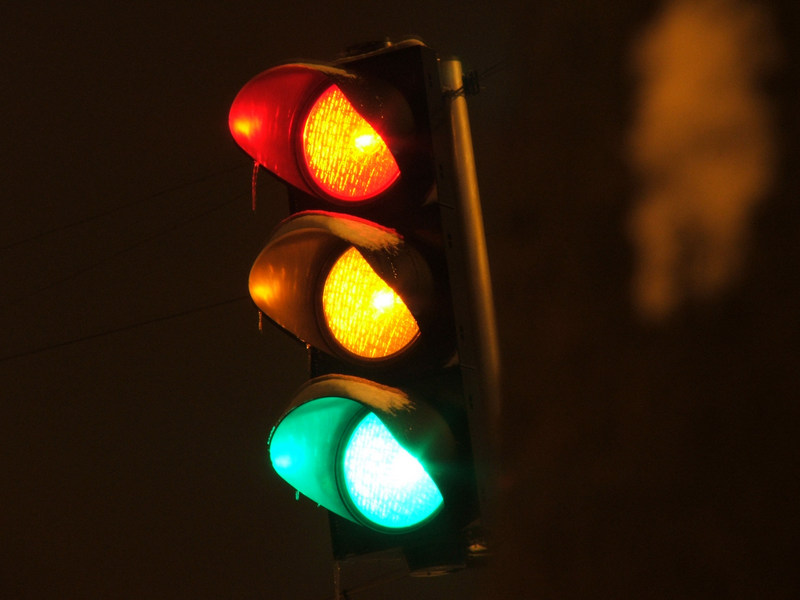
Red Light, Green Light...Yellow Light?

July 22, 2013

Photo courtesy Balazs Szoke

Do you remember playing the game “Red Light, Green Light” when you were a child? One person is the stop light and the rest of the kids line up on the other side of the yard. When the stop light says, “green light” and turns her back, the other players advance toward her. When she turns back around and says, “red light,” anyone caught still moving is out. The stop light repeats this until either someone touches her or all the other kids are out.

It would be nice to have such clear signals in grown-up life, wouldn’t it? Someone or something to tell us “green light”—go forward, or “red light”—stop. Other than literal traffic signals, life is seldom that explicit. Occasionally, our desires and responsibilities neatly align, and we see a clear road ahead. More often, we must develop not only our own internal signaling system of red light, green light, but also a functioning “yellow light”—“use caution”—when making decisions. I want to talk about the importance of that yellow light.

When a decision looms or an exciting opportunity presents itself, yellow lights can keep us from rushing ahead too fast without thinking. Perhaps we’ve decided to focus on a specific goal, or we’ve committed to simplifying life and reducing our activities. After consideration, we may choose to stop instead of go forward. On the other hand, a yellow light might also keep us from automatically saying no when that opportunity arises. Some of us, myself included, can be too cautious—braking when we should step on the gas. Pausing at a mental yellow light, instead of slamming on the brakes, can open our cautious minds just a crack to let in new possibilities. Yellow lights keep us from saying yes or no automatically.

Just as when we approach a yellow light while driving, we must make a decision to stop or go forward. We can’t pause there indefinitely. Our internal yellow lights should be just like that: pauses while we make our decisions, not excuses not to make those decisions.

So how do we develop a healthy internal signaling system? Basically, by asking questions and paying attention to the answers. What will be the consequences of going forward or not going forward? Is this the right thing to do? The right time to do it? What are our bodies telling us (“gut feelings” are called that for a reason) while we consider our options? The more we listen, the more we can trust ourselves.

I believe we’ll live happier lives if we live more intentional ones. Becoming more aware of our inner green, red and yellow lights is one way to do that.

How does your intuition speak to you? Do you follow your own inner signals?

Angela Shaw

Let Them Go

July 17, 2013

Photo courtesy Kent Murray
In this lovely poem by Angela Shaw, who lives in Pennsylvania, we hear a voice of wise counsel: Let the young go, let them do as they will, and admire their grace and beauty as they pass from us into the future. [Introduction by Ted Kooser.]

Children in a Field

They don’t wade in so much as they are taken.
Deep in the day, in the deep of the field,
every current in the grasses whispers hurry
hurry, every yellow spreads its perfume
like a rumor, impelling them further on.
It is the way of girls. It is the sway
of their dresses in the summer trance-
light, their bare calves already far-gone
in green. What songs will they follow?
Whatever the wood warbles, whatever storm
or harm the border promises, whatever
calm. Let them go. Let them go traceless
through the high grass and into the willow-
blur, traceless across the lean blue glint
of the river, to the long dark bodies
of the conifers, and over the welcoming
threshold of nightfall.

American Life in Poetry is made possible by The Poetry Foundation (www.poetryfoundation.org), publisher of Poetry magazine. It is also supported by the Department of English at the University of Nebraska-Lincoln. Reprinted from Poetry,; September, 2004, Vol. 184, No. 5, by permission of the author. Poem copyright © 2004 by Angela Shaw. Introduction copyright © 2013 by The Poetry Foundation. The introduction's author, Ted Kooser, served as United States Poet Laureate Consultant in Poetry to the Library of Congress from 2004-2006.