April Lindner

A Will Greater Than Its Own

October 25, 2017

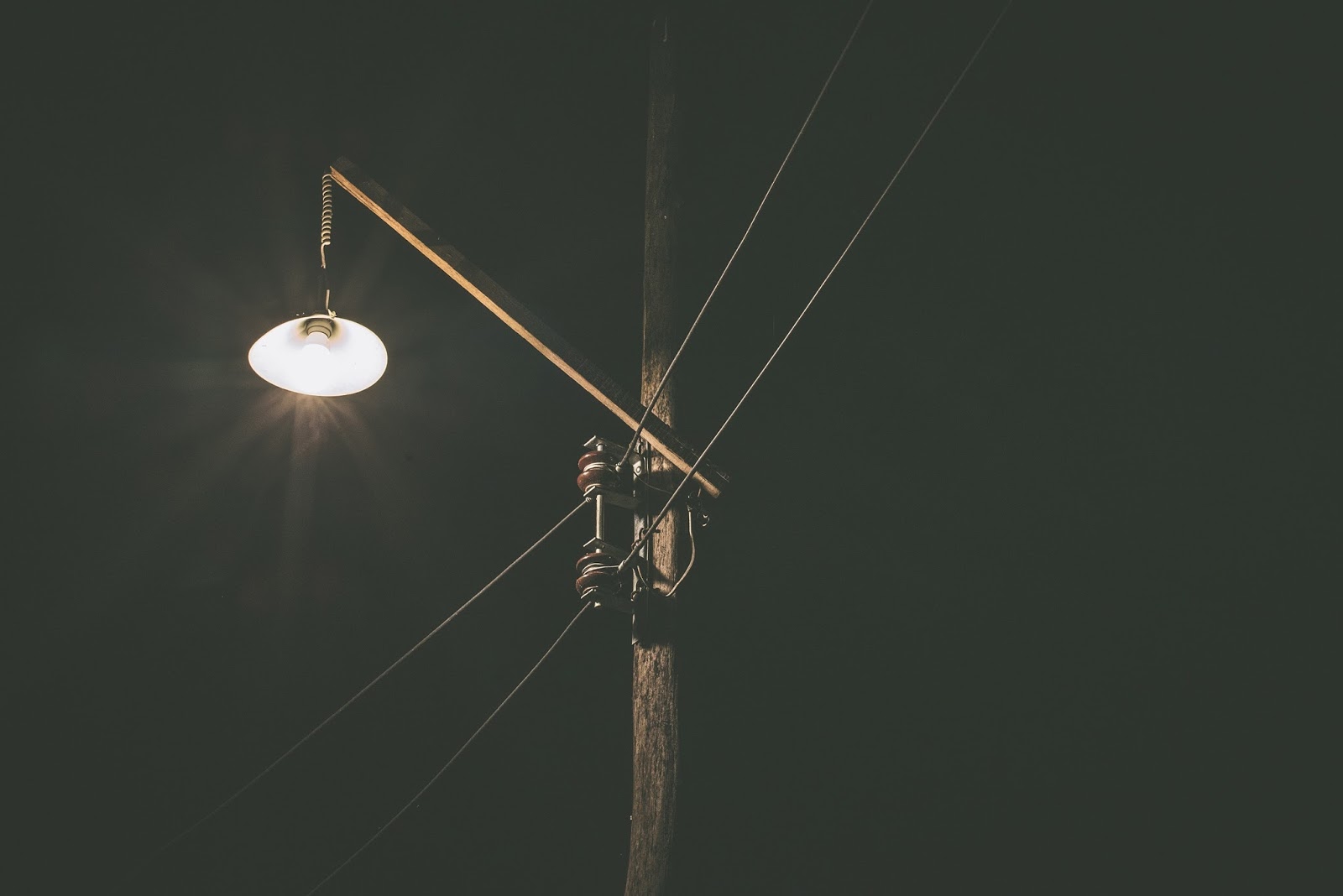
Photo by Sven Scheuermeier on Unsplash

Introduction by Ted Kooser: Several years ago I published a children’s book about a bag in the wind, so it’s no wonder I love this poem by April Lindner, who lives in Pennsylvania. Once you start noticing these windblown bags, you see them everywhere. Her most recent book is This Bed Our Bodies Shaped (Able Muse Press, 2012).

Carried Away

One rainy night we sat in traffic
and, overtired in back, you saw
a wind-whipped grocery bag afloat
beyond the clutch of jagged branches,
swept by gusts and whirled in eddies.
A sudden downdraft swooped it earthward,
where it danced till with a whoosh
a current luffed it past the power lines.
Disowned by gravity, small ghost
not yet snagged by twiggy fingers,
it couldn’t reach the earth. Thin-skinned,
it pulsed, translucent jellyfish.
You wept and pled to be let out
into the dark and slanted rain,
somehow to save that desolate thing.
The light turned green and still you begged,
Go back, go back, on its behalf,
caught and held, bossed and tossed
by a will much greater than its own.


American Life in Poetry is made possible by The Poetry Foundation (www.poetryfoundation.org), publisher of Poetry magazine. It is also supported by the Department of English at the University of Nebraska, Lincoln. Poem copyright ©2010 by April Lindner, “Carried Away,” (The Hudson Review, Vol. LXIII, no. 1, Spring 2010). Poem reprinted by permission of April Lindner and the publisher. Introduction copyright ©2015 by The Poetry Foundation. The introduction’s author, Ted Kooser, served as United States Poet Laureate Consultant in Poetry to the Library of Congress from 2004-2006. We do not accept unsolicited manuscripts.

Apple Hill

Field Trip Friday--California Dreamin'

October 20, 2017

Northern California was particularly photogenic this month. Instead of telling you about my trip, I’m going to share a few of my favorite photos. (Neither of my parents lives in an area threatened by wildfires—at least right now—though we could smell and see smoke some days.)

One of my favorite things to do when I visit my mom is to walk every morning on the land that I grew up visiting every summer. I snap photos of whatever flora and fauna I come across. (Alas, no horses next door this year.) How fallish it looked (click on photos to make them bigger):


The cows came over to see what I was up to:


Loved this mama and baby:


Nothing much has changed since I was a child. I still drag my mother to see horses. This time, we went to the Wild Horse Sanctuary in Shingletown. Interesting place. These are wild ones:


When I visit my dad and step mom, I also get to see my feline “sister”:


This year, we dropped in to see my step mom’s brother, who is the manager of Funderland, an amusement park that’s been open since 1946. He remembers going there when he was a child! The rides were adorable and I want to devote a page in my travel sketchbook to them: 


The day before I came home, we visited a couple of the farms that are part of Apple Hill. In addition to apples, cider, donuts, pies, and lots of other tasty treats, High Hill Farm, where this was taken, had a number of craft booths which were interesting to walk through. You can see the smoke in air in this photo:


 Rainbow Farm had pumpkins and gourds in addition to apples:


I hope you’ve enjoyed this sneak peek into my visit to California. I miss it already. Even though I’ve now lived in Florida longer than I lived in California, since I grew up there it will always feel like home.


Life

The Present Rearranges the Past

October 18, 2017

Photo by SID ZHAO on Unsplash

“Something wonderful happens to you and you instantly look back over your life and see it as a series of fortunate events stretching off into the distance like mountain peaks. Something terrible happens and your life has always been a litany of woe. The present rearranges the past. We never tell the story whole because a life isn’t a story; it’s a whole Milky Way of events and we are forever picking out constellations from it to fit who and where we are.”
—Rebecca Solnit, The Faraway Nearby

Fall

A New Season

October 11, 2017

Photo by Lukasz Szmigiel on Unsplash

“A new season is blowing up the valley, drifting over the hills, rising up from a cooling earth, a new season with its challenges, its changes, its excitements, and its own particular rhythms and miracles.”
—Jean Hersey, The Shape of a Year

What simple pleasures and everyday adventures do you anticipate this fall?

Everyday adventures

Secret Destinations

October 04, 2017

Photo by Chris Lawton on Unsplash

“All journeys have secret destinations of which the traveler is unaware.”
—Martin Buber

I’m off to California to visit my parents this week. At least, that’s what my travel documents say. What secret destinations will I discover? I can’t wait to find out.

What secret destinations have you stumbled upon?

Blooming

What an Orchid Can Teach Us About Blooming

September 29, 2017

I’ve been thinking about growing conditions lately.

Orchids started this train of thought. Mine have always seemed to do fine on our covered lanai without much fuss. However, even though all the plants look healthy, only one or two of them ever actually bloomed. I’d love to have more flowers, so I decided to research each orchid variety I have to see what constituted that plant’s ideal growing conditions. Based on what I learned, I moved several to different positions, providing both more sun and more water than they’d been getting.


Lo and behold, two that hadn’t bloomed since I bought them produced flowers and two more sent up flower spikes that should bloom in the next couple of months.

Huh.

A simple tweak in growing conditions nudged them from just getting by to thriving.

Shortly thereafter I stumbled on this passage:

“When a tree is tender and young, first making its roots, a gardener knows to fence it from deer, fertilize it with nutrients, pay loving attention as it gets started. The gardener doesn’t grow the tree; she provides the conditions in which it can thrive. We need to do the same with our souls, hearts, spirits, bodies. We need to provide the conditions in which we can thrive, and those conditions involve other people. We need to put ourselves in circumstances in which we can be seen, heard, and loved for who we are and want to become.

“We are so used to battering ourselves around. To toughing it out. To taking care of everyone else and not looking after ourselves. We are used to throwing the seeds of our lives in soil and not paying them one more minute of attention. In fact, we do the opposite. We stamp on our hearts. We attack and punish ourselves. We don’t trust our fundamental desire to move toward the light….” (Geneen Roth in When You Eat at the Refrigerator, Pull Up a Chair.)

Roth is specifically writing about how we treat ourselves in relation to food and dieting, but her words apply to everything we do (or don’t do) to nurture ourselves.

Most of us are too used to toughing it out, and to seeing our needs as weaknesses. What would happen if instead of trying to get by on a minimum of sleep, nutrition, downtime, and enjoyment, we tried giving ourselves optimal amounts of the things we need to feel great? Things like healthful, delicious food; sleep; movement that feels good rather than punishing; time to do something just for fun? Are we too busy for that? Does that sound like weakness instead of strength?

How much more beautiful and profuse might our own blooming be if we gave ourselves optimal growing conditions? As I learned from moving orchids around, it might not take much to help us thrive.

Taking steps to nurture ourselves doesn’t mean becoming hothouse flowers that wither in every cold draft or scorching heat wave. When we learn our own ideal growing conditions and make efforts to provide them, we grow stronger and healthier. A strong plant can more easily withstand hardships when they come.

Do you want to do more than survive? To bloom abundantly rather than just put out a few leaves? What are your ideal growing conditions? In the comments below, share some things you can do to bloom more often!

Lois Parker Edstrom

One Person's Trash...

September 27, 2017

Photo courtesy congerdesign

Introduction by Ted Kooser: Lois Parker Edstrom, a retired nurse, lives on Whidbey Island, off the coast of Washington, and her 2016 book Night Beyond Black, from MoonPath Press, has many accessible and moving poems. Here's just one example.

Doing Dishes

She said she had always wanted to do it;
throw away dirty dishes rather than wash them

and she did, after breakfast, toss the blue, green,
orange, and yellow Fiestaware into the trash.

Transferring from New York to Germany
with her husband and children,

the movers coming that day, she chucked the dishes
in among the banana peels, egg shells, coffee grounds,

bits of bacon, paper towels and called it good.
What she could not know is that a young mother

in that very town received a much needed set
of tableware when her husband returned

home from work that evening. Bright dishes
that showed up chipped and grubby

like old friends with egg on their faces.

American Life in Poetry is made possible by The Poetry Foundation (www.poetryfoundation.org), publisher of Poetry magazine. It is also supported by the Department of English at the University of Nebraska, Lincoln. Poem copyright ©2016 by Lois Parker Edstrom, “Doing Dishes,” from Night Beyond Black, (MoonPath Press, 2016). Poem reprinted by permission of Lois Parker Edstrom and the publisher. Introduction copyright ©2017 by The Poetry Foundation. The introduction’s author, Ted Kooser, served as United States Poet Laureate Consultant in Poetry to the Library of Congress from 2004-2006. We do not accept unsolicited manuscripts.