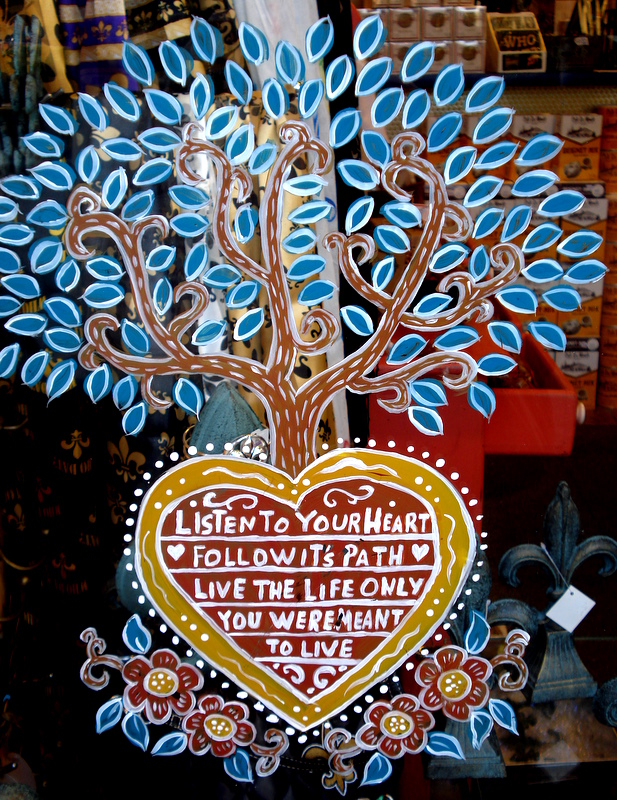
| Life is good |
I have a complaint. Where has the Table of Contents gone? Two of the books I’m reading have chapters with names instead of just numbers, but no Table of Contents. The publisher couldn’t spare the space or paper for a Table of Contents, yet they can have a page in the back with details about the book’s typeface?! I’m as interested in the typeface as the next person (not very), but I’d rather be able to read the chapter titles and speculate on their contents. I also like consulting the TOC to see how I’m progressing through the book. I don’t like flipping through the book to read the chapter titles, or trying to assess my progress through them this way. It’s just one of my quirks.
A quirk is a peculiarity of behavior, an idiosyncrasy. Our quirks are part of the reason we are who we are—and most of them are completely harmless, though they may seem strange to others. Some of them become habits, or even superstitions—like the hockey players who will not step on the team logo on the floor of their locker room (and won’t allow visitors to do so, either) or the Hollywood writer who backs out of a room in which something good happened.
Quirks can be as simple as whether you put on both socks, then both shoes, or a sock and a shoe and a sock and a shoe; how you take your shower; in what order you eat the foods that make up your dinner (“never end with a bite of something you don’t like”). Some of my additional quirks include:
- I often get the hiccups when I take the first sip or two of a carbonated drink.
- I don’t like mayonnaise on anything except steamed artichokes.
- I keep lists of all the books I read each year.
- I talk to my dog and my horse just like they are people. (They don’t talk back, however, at least in words…)
- I prefer to slice fruit like apples, peaches or plums rather than eat them whole.
| Morning |
After spending a few days with my mom and step dad, I headed back down to Sacramento to return my rental car and meet my dad and step mom. My companions on the drive:
I loved the drive to and from my mom’s house—it’s straight and easy, up Interstate 5, a trip we took many times when I was growing up. The drive gave me time to think, to sing along with the iPod, to watch for landmarks from my childhood letting me know I was getting close to my destination. I love the openness, the flat fields backed by misty little hills in the distance.
Sacramento was HOT. One hundred degrees a couple of the three days I was there—but, say it with me, it was a dry heat! And it was cool in the morning and evening, so still not as uncomfortable as Florida.
My step mom and I spent our time doing all the things we enjoyed when I was growing up: shopping, going to the movies and visiting with family. My step brother came over for dinner and we visited my step grandma at her assisted living facility, where my step uncle met us. (My dad and step mom have been married for more than 30 years, so her family is my family.) And, of course, there’s my “sister”:
One of the highlights of the trip: Harness racing at Cal Expo. My dad used to take us to these when I came to visit him in the summer. I adored watching the horses race, and one memorable evening, we got to ride in the starting car. Occasionally we’d arrive early and walk through the stables where I breathed in the scent of hay and horse and walked on air for hours afterwards.
Harness racers are standardbreds, who trot or pace around a track pulling a two-wheeled cart (called a sulky) and driver, at up to speeds of more than 30 mph. (In the pace, the two legs on the same side of the horse move forward together, unlike the trot, where the two legs diagonally opposite from each other move forward together.) Most races are a mile long. The most famous race is the Hambletonian, held every year in August at The Meadowlands racetrack in New Jersey, but you can see harness racing at many county and state fairs all over the U.S. (For more information, see http://www.ustrotting.com/. To learn more about standardbreds, go here.)
We ate dinner at the Turf Club and spent several hours watching the races. And let me tell you, it’s far too easy to place bets. You can buy a voucher for whatever amount you want, then slip your voucher into a machine, use a touch screen to place your bet and away you(r money) go(es). I limited myself to a $20 voucher.
My system of betting was highly scientific. First, I chose a horse whose name had some meaning for me. I got my dad to decipher the racing form and quickly read up on the horse’s stats. I usually placed a “win, place, show” bet, so that I would win if my horse came in first, second or third, and I liked to bet on long shots (or at least not favorites). My first race, I chose “Racetrack Diva” in honor of my friend’s horse, Glory, an off-the-track thoroughbred. Diva obliged me by coming in third. The next race I bet on, I chose “Amazon Dot” because of my love affair with Amazon.com. Dot won the race! I began to feel pretty proud of my system! You can guess what happened next. For the rest of the evening, none of my choices came in better than fourth. I ended the evening with a net loss of $3.90, which I consider well worth it for the amount of entertainment I got.
My family—both sets—basically spoiled me while I was in California, and gave me a much-needed break from my everyday responsibilities. I felt so lucky to be able to see my California family while my Florida family took care of themselves.
Monday, I asked, “What makes a place home for you?” This morning, I found an answer: “Where we love is home—home that our feet may leave but not our hearts.” (Oliver Wendell Holmes)
Indian Summer
There’s a farm auction up the road.
Wind has its bid in for the leaves.
Already bugs flurry the headlights
between cornfields at night.
If this world were permanent,
I could dance full as the squaw dress
on the clothesline.
I would not see winter
in the square of white yard-light on the wall.
But something tugs at me.
The world is at a loss and I am part of it
migrating daily.
Everything is up for grabs
like a box of farm tools broken open.
I hear the spirits often in the garden
and along the shore of corn.
I know this place is not mine.
I hear them up the road again.
This world is a horizon, an open sea.
Behind the house, the white iceberg of the barn.
American Life in Poetry is made possible by The Poetry Foundation (www.poetryfoundation.org), publisher of Poetry magazine. It is also supported by the Department of English at the University of Nebraska, Lincoln. Copyright ©2007 by Diane Glancy, whose novel “The Reason For Crows,” is forthcoming from State University of New York Press, 2009. Poem reprinted from “Asylum in the Grasslands,” University of Arizona Press, 2007, by permission of Diane Glancy. Introduction copyright © 2009 by The Poetry Foundation. The introduction’s author, Ted Kooser, served as United States Poet Laureate Consultant in Poetry to the Library of Congress from 2004-2006.
Before I go any farther, I’d like to thank my husband and mother-in-law who kept things running on the home front, making it possible for me to make this trip—love and gratitude to you both!
I flew to Sacramento, where I was born and where my dad and step mom still live, then rented a car and drove a couple hours north to where my mom and step dad live. I split my eight-day visit between the two of them. This blog post will cover the first half of my trip, and Friday’s will cover the rest.
I’ve written about where my mom lives before. Since we moved a lot as I grew up, this house is the closest thing I have to a childhood home. Many of my happiest memories occurred here, and it will always be one of my favorite places. It’s strange to me that though I grew up in California, went to college and got married there, I’ve now lived in Florida almost as long if not longer. (I don’t want to do the math!)
My first full day at my mom’s, I took a walk through part of the property, revisiting places I’d loved as a child:
I’d made two requests of my mom: visits to Trader Joe’s and to Cal’s Books, an awesome used book store in Redding, CA. TJ’s, as we always used to call it, was more an exercise in torture, because I couldn’t bring back much of anything…though I did buy some snacks and wine to enjoy while I was in California. And Cal’s…well, if you know me at all, you know the attraction there. I found only two books this time, which was probably just as well because I didn’t have room in my suitcase for more.
The last day of my stay with my mom, we checked out Anderson River Park, on the banks of the Sacramento River. After eating our lunch there, we spent the afternoon reading, chatting, relaxing and playing musical chairs trying to stay in the shade. Every so often, a breeze would blow off the river to cool us down. I wandered about a little, taking pictures.
This trip brings up the complicated question of where my “home” really is. Is it the place I grew up, where my birth family lives, and that I still love? Is it the place my husband, son and I live? For me, it’s both—the place of my roots that I will always long for AND the place I currently live with the people I love. I don’t have to choose—the more places that feel like home, the better.
What makes a place home for you?
By the time you read this, I’ll be in the air, on the way to California to visit my family—all by myself. My husband and son get to spend some quality time with each other (heh) while I take a break. I spent much of yesterday afternoon packing clothes and deciding which books to take (yes, I know an e-reader would be easier to pack, but I’m not there yet—plus I’m still working on reading challenges!). I’m only carrying on (it's been my experience that checked luggage is lost luggage) so space is an issue. I won’t be posting for a week or so, but instead plan to fill the well a bit.
Have a great week!
Autumn is my favorite season. Yes, we have autumn in Florida—it’s just not like a typical “autumn” elsewhere. In autumn, cold fronts drop the humidity, and I begin to think being outside is a good idea again. In autumn, I plant a few vegetables hoping for harvest before winter comes.
Autumn isn’t really here yet—but it’s coming. It’s coming.
What’s your favorite season?
![]() |
| Photo courtesy Fred Fokkelman |
Old Houses
Year after year after year
I have come to love slowly
how old houses hold themselves—
before November’s drizzled rain
or the refreshing light of June—
as if they have all come to agree
that, in time, the days are no longer
a matter of suffering or rejoicing.
I have come to love
how they take on the color of rain or sun
as they go on keeping their vigil
without need of a sign, awaiting nothing
more than the birds that sing from the eaves,
the seizing cold that sounds the rafters.
American Life in Poetry is made possible by The Poetry Foundation (www.poetryfoundation.org), publisher of Poetry magazine. It is also supported by the Department of English at the University of Nebraska, Lincoln. Poem copyright ©2010 by Robert Cording from his most recent book of poetry, “Walking with Ruskin,” CavanKerry Press, Ltd., 2010. Reprinted by permission of Robert Cording. Introduction copyright ©2011 by The Poetry Foundation. The introduction’s author, Ted Kooser, served as United States Poet Laureate Consultant in Poetry to the Library of Congress from 2004-2006.
One of the bonuses of having my own horse has been the friends I’ve made at the barn where I board. Not long ago, two of us were grazing our horses in the grass along the dirt driveway, when a third friend, Mary Ann, strolled down the road, and reported that she’d just climbed a tree overlooking one of the horses’ paddocks—just to see if she could. This ignited an enthusiastic discussion. Marianne (yes, her name is spelled right: friend one in this story is Mary Ann, friend two is Marianne) admitted she’s climbed the camphor tree in her front yard, also because she wanted to see if she could do it. Marianne also remembered climbing trees with a friend when she was a kid, and rigging a pulley and basket system between their two trees, sending comic books back and forth to each other.
I haven’t climbed any trees lately (I’m thinking I need to get back in practice!), but it was a favorite past time when I was a girl. When we lived in southern California, we had an apricot tree growing near our flat-roofed garage. This tree, in addition to being covered with delicious fruit every summer, also sent its limbs up and over the garage roof, creating a small, enclosed bower, perfect for an 11-year-old who would take a book, shinny up the tree and curl up in a secluded and private reading nook.
Mary Ann just happens to be 60 years old. She has the most youthful spirit of anyone I know. She comes to the barn daily where she does barn chores and takes care of her 22-year-old ex-racehorse. I’m not saying it’s tree climbing that is keeping her young, but it can’t hurt.
| Mary Ann and Frenchy |
Is there anything you secretly long to do that you think you can’t? What keeps you feeling young and energized?
This weekend, we watched as Hurricane Irene sashayed up the East Coast, killing 21, flooding cities all the way up into Canada and leaving millions without power—and her effects were not as bad as feared!
Since we live in Florida’s Tampa Bay area, we’re intimately familiar with hurricanes. Though we’ve been spared the past few years, in 2004 and 2005, eight hurricanes blew through here. Our home was undamaged, but we lost electricity several times, an uncomfortable situation in sticky August. I learned how important being prepared could be, and after struggling along with candles and flashlights, I finally bought battery-operated lamps, and fans to help us keep from getting too hot. Now every year at the end of May, I pull out my list of recommended items to have on hand: water, canned and packaged food, first aid supplies, medications, pet food, and so on. I remind myself that this year could be the year we get a direct hit and not to get complacent.
It occurred to me that in the same manner I prepare for physical storms, I could also prepare for emotional storms that come my way. Just as I stock up on water and food and batteries, I could “stock up” on things that soothe me when I’m angry, sad or just emotionally overwhelmed.
The key to hurricane preparedness is to make ongoing preparations, not wait until a storm is bearing down on you. You don’t want to go to the grocery store and find the shelves bare, do you? Just so, the time to prepare for an emotional hurricane is before the winds begin to pick up and the rain pours. Here are some things in my emotional hurricane kit:
Affirmations and inspiring quotes written on 3 x 5 cards. I look through these during times of emotional upheaval. One example: “We insist that we can’t possibly be happy until tomorrow, when things change. But if happiness is possible tomorrow, it is possible today. If love is possible tomorrow, it is possible today. We can find healing even if nothing changes” (quoted from Life Lessons: Two Experts on Death and Dying Teach Us About the Mysteries of Life and Living, by Elizabeth Kubler-Ross and David Kessler).
Something funny and light to read at bedtime. I’m currently reading The Provincial Lady in London, by E.M. Delafield. I find her mild, dry humor very soothing and perfect for bedtime. I also love Bill Bryson’s I’m a Stranger Here Myself, Dave Barry’s compilations of columns, and even the occasional Baby Blues comic collection. I’d rather go to sleep laughing than crying, wouldn’t you?
“Quiet time” every morning. Every day, I spend a half hour or so reading inspirational or spiritual material in an effort to begin my day with right thinking and emotional health. I also write morning pages, a practice described by Julia Cameron in The Artist’s Way. I feel morning pages help both to clear out my brain of non-essentials and jump start my creative thinking. I do believe in something larger than myself, whether you call it God or the Universe or some other man-made term, so I often express gratitude and ask for inspiration.
Keeping physical needs met. I’ve learned that to avoid unnecessary emotional storms, I should get enough rest, exercise regularly, eat as healthy as possible and not overschedule myself. Becoming a martyr and not caring for myself properly is just asking for a storm.
When all else fails: good chocolate! I know it’s best not to comfort myself with food. However. I find the dark, rich stuff is satisfying in small amounts and if I tuck it away where I don’t see it constantly, I don’t eat too much, and it’s there when a little bit of sweetness is most welcome.
Despite the damage and suffering, which I do not wish to make light of in any way, people seemed mostly prepared for Hurricane Irene and took appropriate precautions, probably saving many lives. Unlike a literal hurricane which can be identified and tracked long before it reaches land, you never know when an emotional storm will blow through. That’s all the more reason to nourish yourself spiritually, emotionally and physically every day so you can be ready when the storms come.
How do you prepare for and weather the emotional storms of life?
As if alligators weren't enough, this sign recently went up in our subdivision:
Humans first prized horses for their strength and speed, but we have since been captivated by their beauty, their deep eyes and mysterious silences. Here’s a poem by Robert Wrigley, who lives in
After a Rainstorm
Because I have come to the fence at night,
the horses arrive also from their ancient stable.
They let me stroke their long faces, and I note
in the light of the now-merging moon
how they, a Morgan and a Quarter, have been
by shake-guttered raindrops
spotted around their rumps and thus made
Appaloosas, the ancestral horses of this place.
Maybe because it is night, they are nervous,
or maybe because they too sense
what they have become, they seem
to be waiting for me to say something
to whatever ancient spirits might still abide here,
that they might awaken from this strange dream,
in which there are fences and stables and a man
who doesn’t know a single word they understand.
I'm sure you won't have any trouble recognizing why I liked this poem...